
A Bridge Between the Past and the Future
10th Anniversary Edition,Section 2
Journalist
Canada
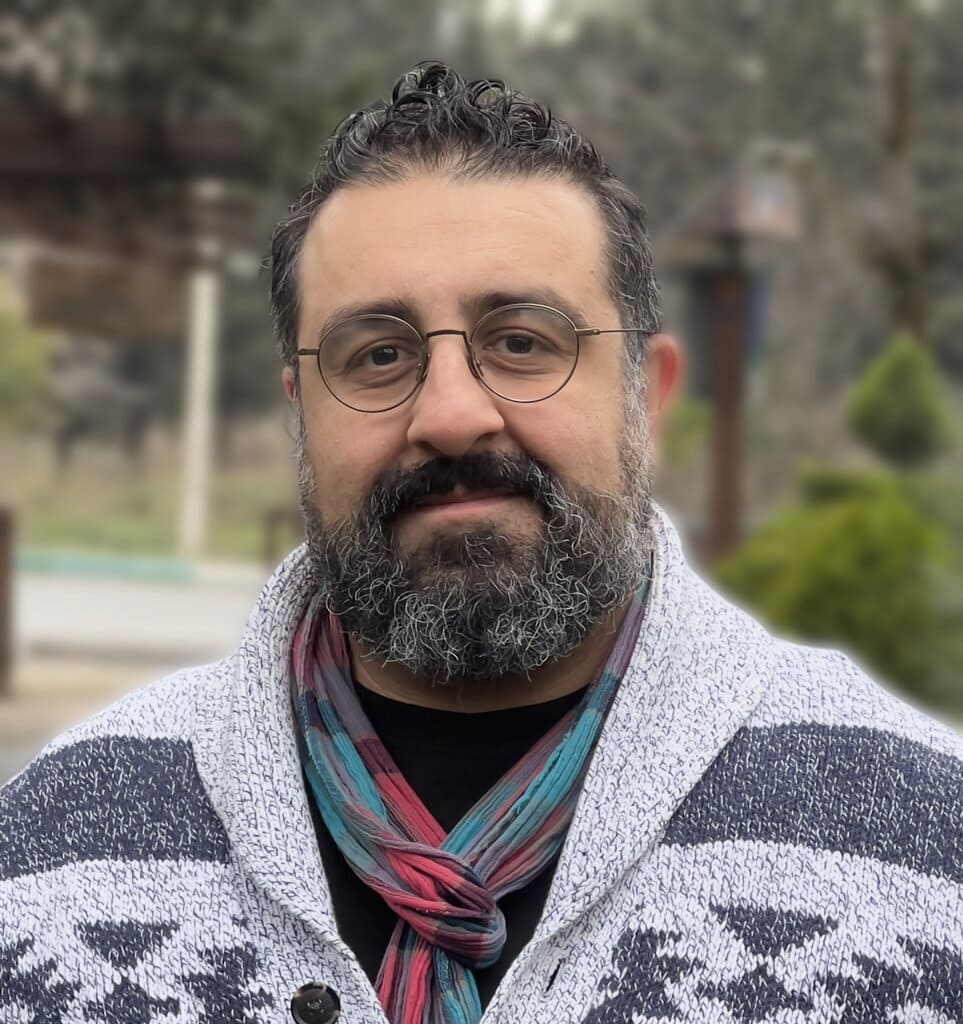
Pooyan Tabatabaei
Journalist and Founder of Titre Mag
We Became the Titre So We Would Not Be Forgotten – Part 2
First Note
Ethnic Media: A Bridge Between the Past and the Future in a New Land
I immigrated to Canada in the year 2000. Before that, I had spent several years working in the fields of art and media and had developed a deep familiarity with them. But arriving in a new country—with a different culture, a new language, and a complex social fabric—required rediscovery and learning from scratch. Above all, I needed guidance and companionship on this path. Someone to show me the doors, not necessarily to open them.
Two individuals played a crucial role in that chapter of my life. Iraj Emad Khorasani, a journalist and social activist, introduced me to the Canadian media landscape. And Mahmoud Meraji, a passionate painter and gifted artist, helped me discover the Iranian Canadian art world. He became the bridge that connected me to Iranian artists living in Canada. These two were not just inspiring friends. They were my connection to the Canadian expression of art and journalism, a real bridge into the cultural life of this new land.
Back then, the only relatively serious and active Farsi-language media outlet was a weekly newspaper called Shahrvand, published in Toronto. Although from a professional standpoint it was far from the standards of quality journalism, it was still a place to get to know Persian-speaking writers, artists, and activists. For many of us, it became a kind of cultural gathering spot. But in the end, due to poor management and the lack of a sustainable structure, Shahrvand ceased publication about seven years ago. What is more painful is that today, there is no trace of those years of work—not even in digital form. All those articles, efforts, and memories have vanished without an archive or an online footprint. What a loss. What a shame.
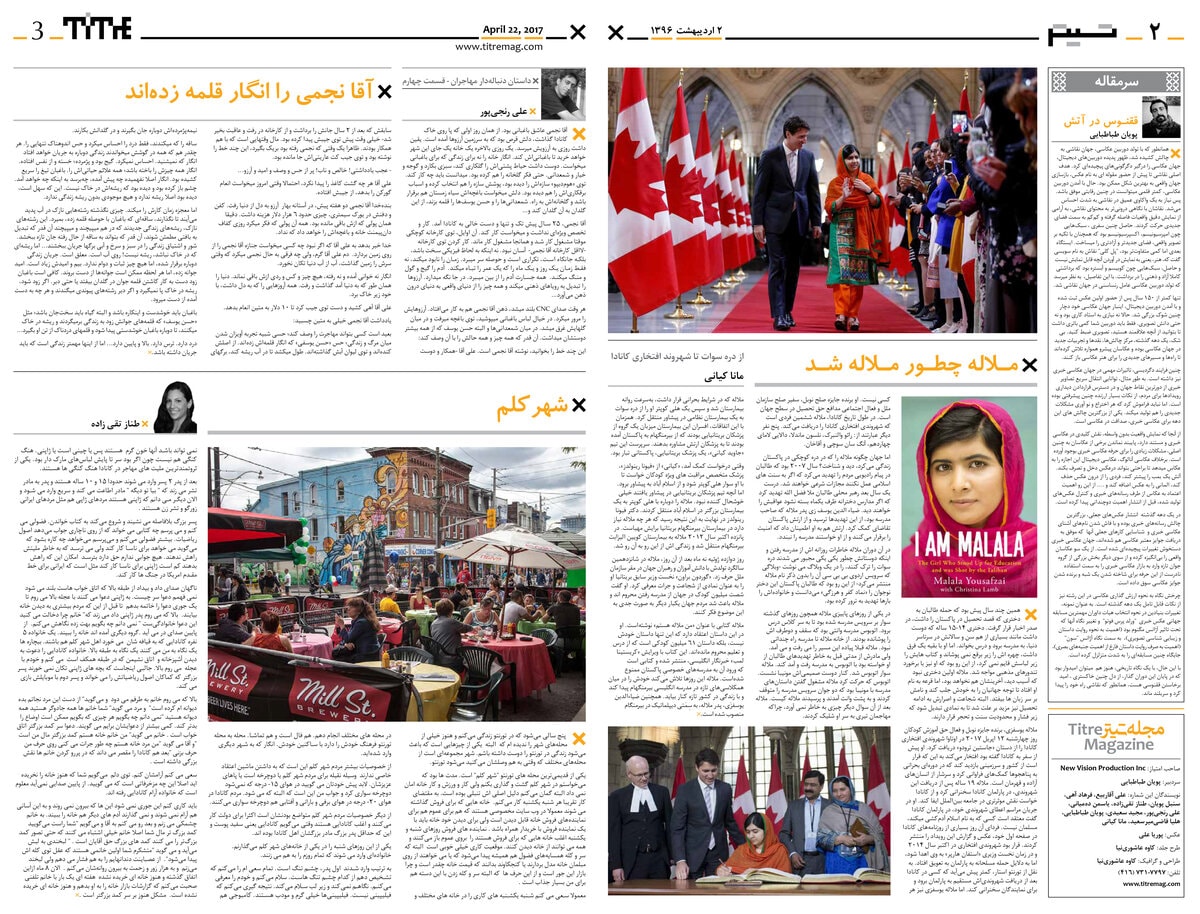
The rest of the Farsi-language magazines were more advertising pamphlets than content-driven publications. Their pages were dedicated to advertisers, with little room left for real content. Amid all this, one magazine based in Montreal, Hafteh, managed to endure and continues to produce professional content to this day. There was also the short-lived and controversial Siah o Sefid, a sensational and semi-pornographic magazine that, despite being publicly condemned by many, somehow found its way into nearly every household.
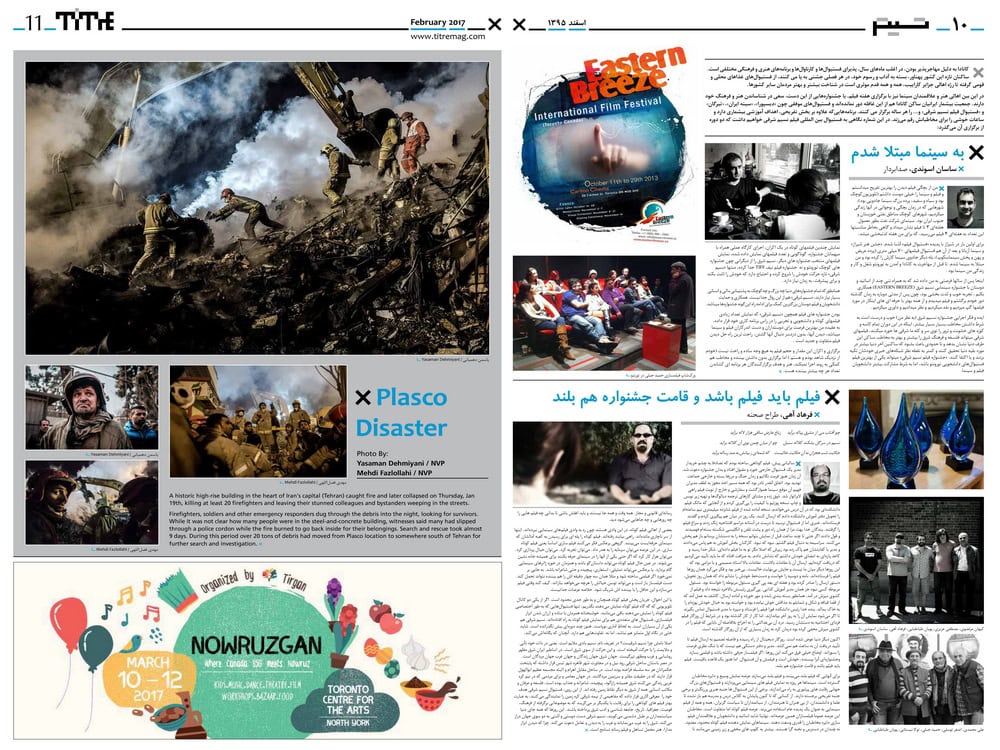
Despite contributing to various publications over the years, my share of Canada’s Farsi-language media landscape remained very limited. The main reason was the absence of a professional and credible platform where real work could be done. That remained the case until 2014, when, after fourteen years of living, observing, experiencing, and engaging in Canada, I decided to build my own path. And that is how Titre magazine was born.
We launched the magazine with a small but passionate team. Our focus was on art, culture, and the lesser-heard stories of the Farsi-speaking community. Over time, Titre grew, and its scope broadened. We experimented with different content formats—articles, interviews, podcasts, videos, and documentaries. Building and sustaining an independent, professional, and enduring media outlet in a country like Canada, with no major funding, has been a difficult and at times exhausting task. But with the help of dedicated writers, the support of generous donors, and a loyal, hardworking team, we not only stayed on our feet, we moved forward.
Personally, I believe that in a multicultural society like Canada, ethnic media is not merely a tool for broadcasting information. It is a narrator of migration experiences, a vessel of collective memory, and the language of wounds and dreams. Without seriousness and quality, such media can allow a community’s identity to fade over time. We created Titre for precisely this reason—to preserve the voice, to keep the stories from being lost, and with the hope that in the heart of migration, art and thought might find a safe home in which to be reflected.
Second Note
The Days When Vajeh Still Brought Us Together
When I arrived in Canada in the year 2000, the Iranian community here was still small and emerging. At the time, official statistics showed that the Iranian population across Canada had not yet reached one hundred thousand. Naturally, the number of Iranian writers, artists, and journalists was limited. The cultural space of the diaspora was still taking shape, raw but full of emotion, inexperienced yet filled with hope and energy.
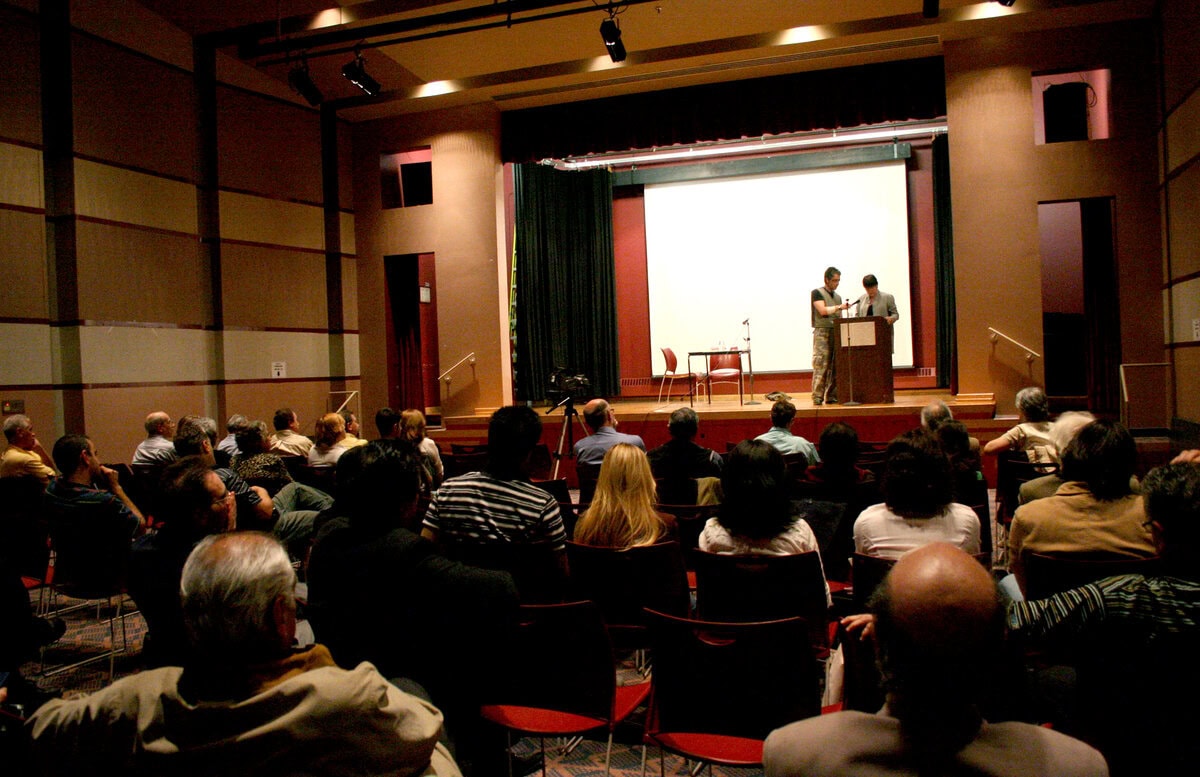
In those early years, I was introduced to one of the first and rare Iranian cultural gatherings in Toronto: Shab-haye Vajeh (the monthly Vajeh nights). (Vajeh, meaning “word” in Persian, was also the name of this artistic initiative.)
These monthly gatherings became a meeting point for Persian-speaking lovers of literature and art in migration. They were nights filled with poetry and voice, spaces where I first saw how, even in the heart of migration, words could be brought together to build a cultural home. For me, those nights were a kind of awakening, a reconciliation with my mother tongue, with imagination, and with people.
The events usually took place in one of the small halls of a public library or local community center. The settings were modest but intimate, unpretentious yet warm. The programs blended poetry readings, short story recitations, excerpts from novels, occasional theatrical performances, and sometimes visual presentations. Although literature was the main focus of Vajeh nights, these spaces quietly planted the seeds for many artistic collaborations and friendships.
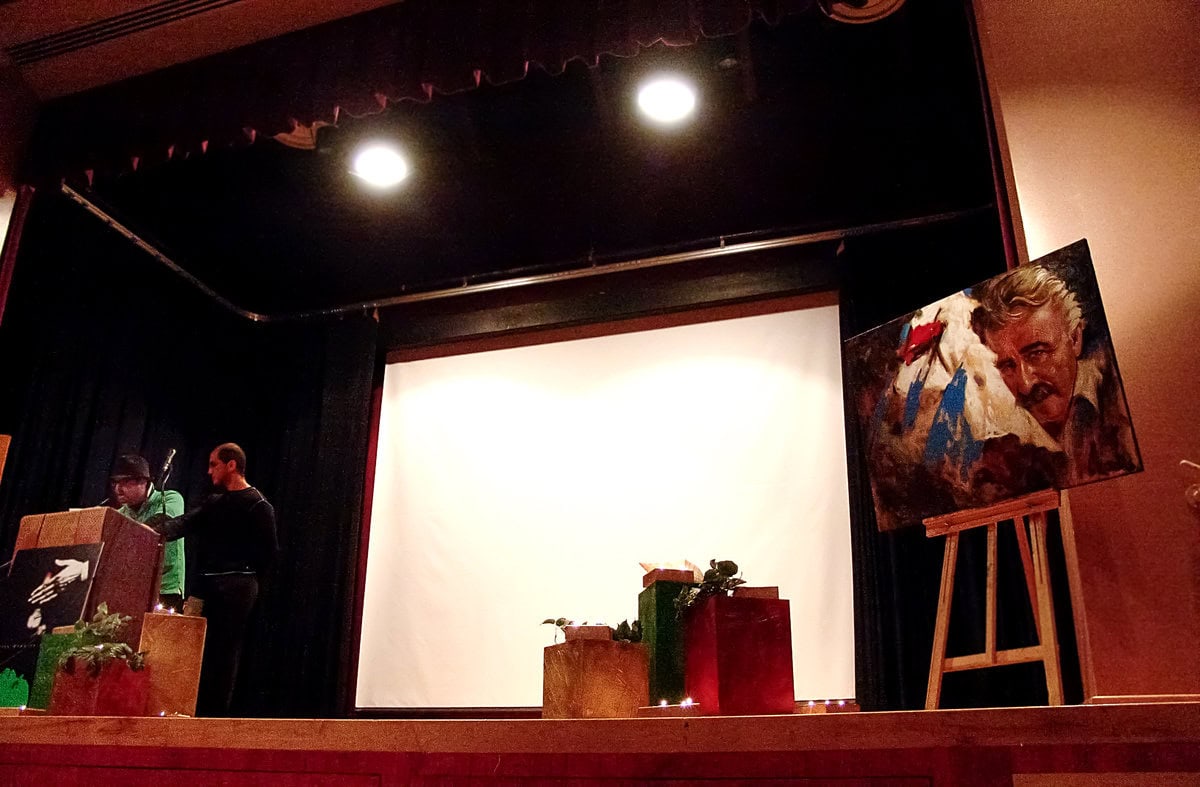
Many prominent and influential figures in Persian art and literature either regularly attended or were invited to these events: Reza Baraheni, Sasan Ghahreman, Niaz Salimi, Levon Haftvan, Dona Rabati, Mahmoud Meraji, Siavash Shabanpour, Saghi Ghahreman, and even artists from other cities like Hossein Sharang from Montreal and the exiled writer Mansour Koushan. These gatherings created an atmosphere where everything revolved around language, imagination, and cultural belonging.
Up until around 2010, this small cultural circle remained remarkably cohesive despite its limitations. Most events were coordinated so as not to overlap, and if simultaneous programs did arise, organizers preferred to collaborate rather than compete. The community was still small, but it had a big heart and an open mind.
As time went on — especially with the start of Mahmoud Ahmadinejad’s presidency in Iran — the political and social climate in the country shifted, and those shifts gradually reached the diaspora as well. The initial sense of unity began to fade. Rifts formed within that once harmonious group. Some cultural activists left, others became disheartened, disagreements and ideological differences grew stronger, and that early spirit of solidarity slowly dissolved.
In the midst of this, a new wave of Iranian migration to Canada began, migrants with different concerns, experiences, and perspectives who would go on to reshape the cultural and social fabric of the Iranian community. I will return to these developments in more detail in later sections of this editorial.
Still, Vajeh nights and gatherings like them remain living reminders of a time when words were not just tools for expression, but bonds that held people together. In those days, media had not yet taken form, institutional structures did not yet exist, but words alone were powerful enough to unite us.
These memories, for many of us, are not just echoes of the past, they light the way forward. Those nights were symbols of the early passion of migration, of a time when everything was still being built, but hope was in abundance. Words that, even now, still gather, if there is an ear willing to listen.
July 16, 2025