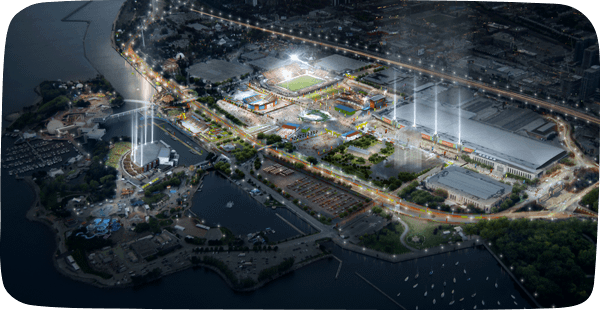

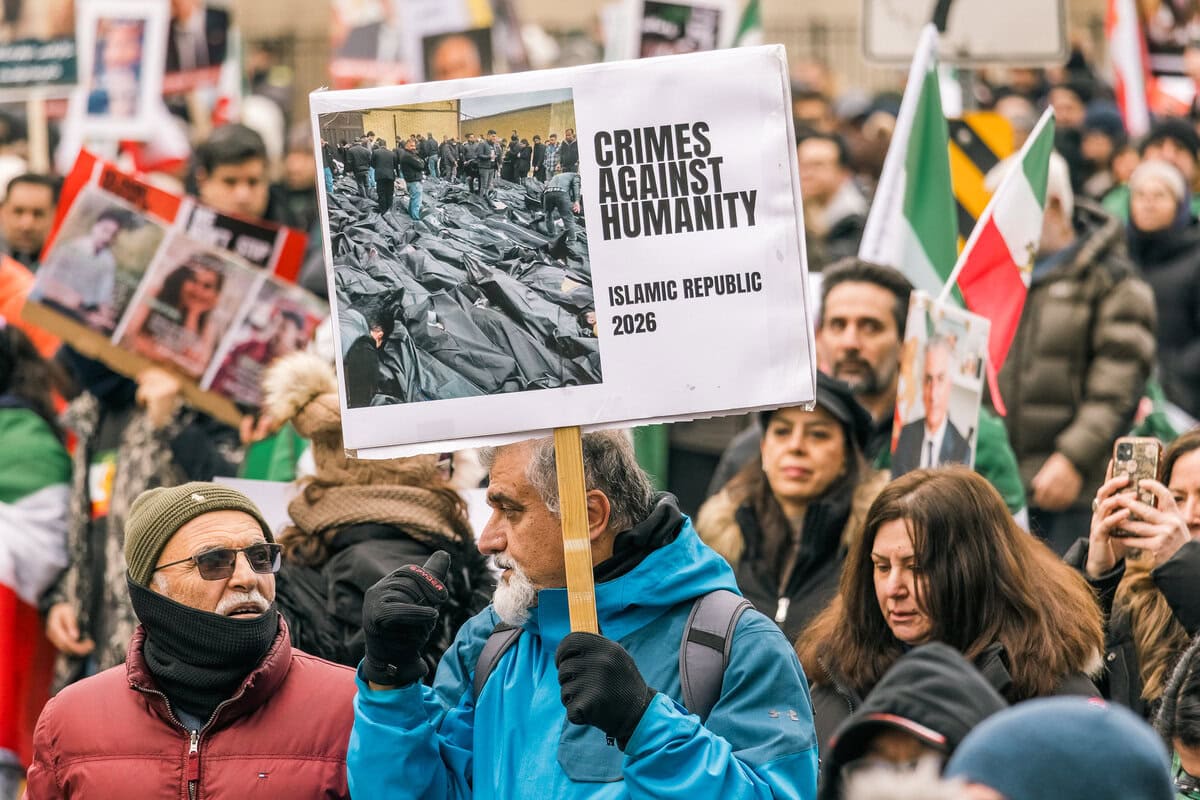
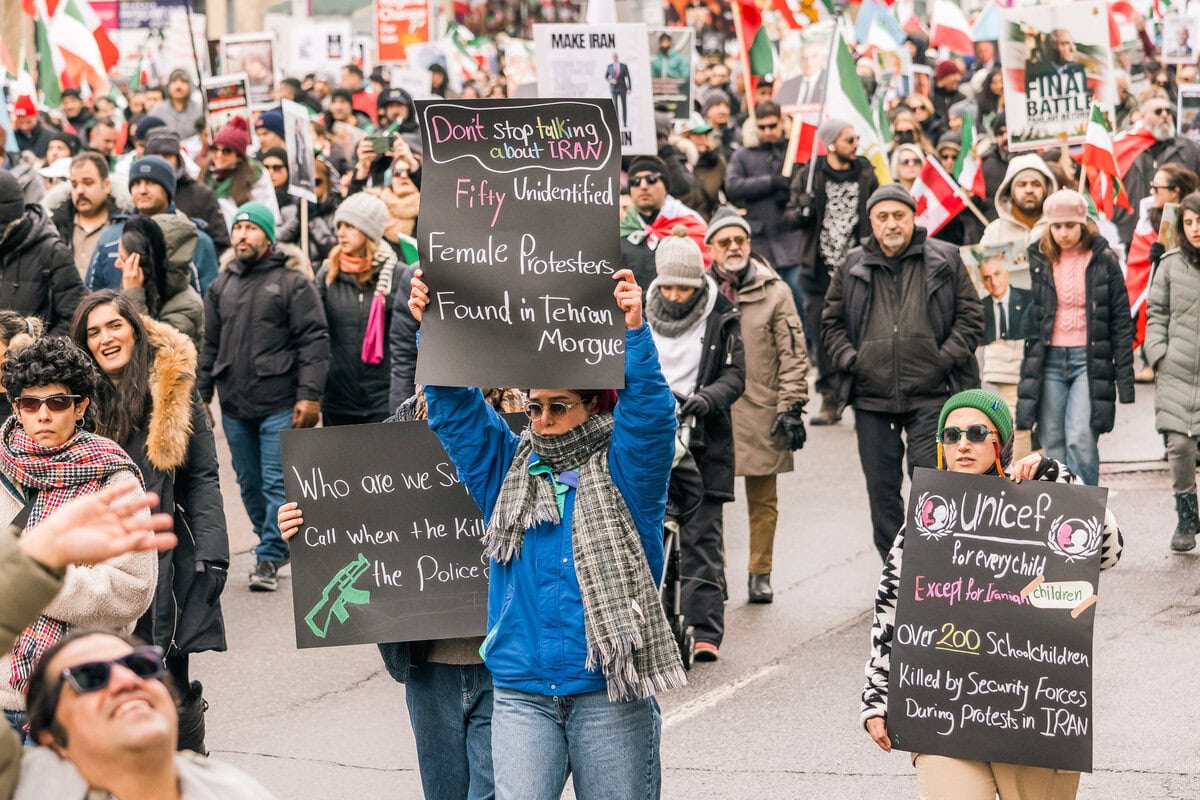
Pooyan Tabatabaei | On Saturday, February 14, Toronto witnessed one of the largest gatherings of Iranians ever held outside of Iran. Toronto Police estimated that more than 350,000 people filled the streets of North York — a figure striking not only for its size but for its historic resonance. In near-freezing temperatures, a vast and determined crowd assembled to deliver a unified message: a demand for meaningful change in Iran and an unequivocal condemnation of the regime’s violent crackdown on protesters.
The magnitude of the rally was not defined solely by numbers. Its deeper significance lay in the diversity of those present and the clarity of the collective message. The Iranian diaspora, often characterized by ideological fragmentation and competing visions for Iran’s political future, demonstrated a rare moment of convergence. Monarchists, republicans, liberals, left-leaning activists, and politically unaffiliated citizens stood side by side. While disagreements about future leadership remain, the overwhelming majority gathered around a common principle: an end to repression and a transition away from the current political order.
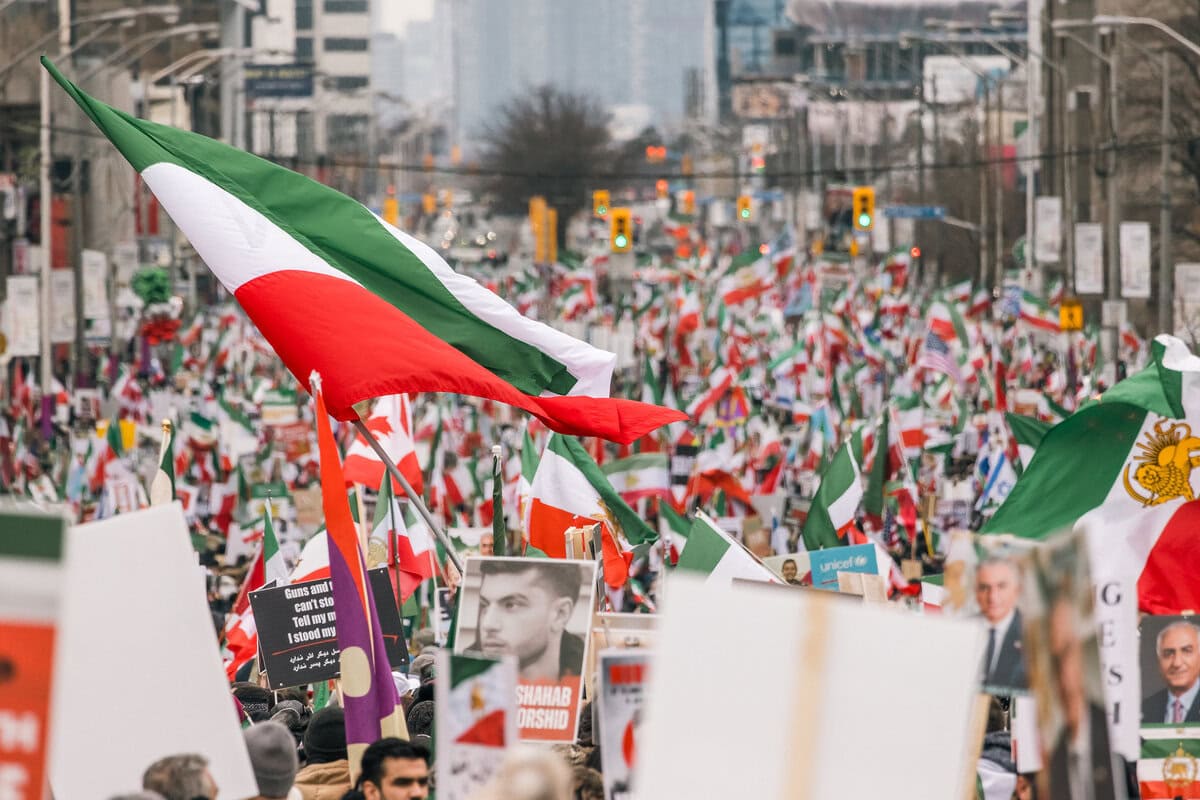
Throughout the day, the tone of the demonstration remained disciplined and cohesive. Families marched alongside students, professionals, artists, and long-time community organizers. Police, firefighters, and emergency response teams were present to ensure public safety, and the event unfolded in a structured and orderly manner. In a symbolic gesture, a group of participants distributed single roses accompanied by handwritten notes of appreciation to officers and first responders. After the rally concluded, volunteers stayed behind to collect litter, underscoring the community’s effort to frame the event not only as a protest, but as a responsible civic gathering reflective of its values.
The political weight of the rally was reinforced by the presence of Canadian officials. Ontario Premier Doug Ford appeared at the gathering and voiced support for human rights while condemning state repression. He acknowledged the Iranian community’s contributions to Ontario’s economic and social fabric and emphasized that calls for freedom and accountability should not be ignored. Several former federal and provincial politicians, past Members of Parliament, and municipal representatives were also in attendance, signaling that developments in Iran have become part of a broader political conversation in Canada, not merely a diaspora concern.
This convergence unfolded against a backdrop of intensifying pressure inside Iran. Reports indicate that many of the remaining left-wing politicians and ideological figures — including those who once operated within the official political structure — have either been summoned for interrogation or are already imprisoned. Individuals previously associated with reformist or internal opposition currents have increasingly found themselves sidelined or subjected to security measures. The tightening political climate suggests that even factions once considered part of the system are no longer shielded from repression.
At the same time, President Masoud Pezeshkian’s popularity has reportedly declined sharply, not only among long-standing critics of the establishment but also within segments of his own reformist and left-leaning support base. Political observers argue that his political capital has diminished significantly, with some suggesting that he has exhausted his remaining leverage within the system. The perception that his capacity to enact meaningful reform has narrowed has fueled broader public frustration. This growing disillusionment inside Iran has amplified the urgency and emotional force of diaspora mobilization abroad.
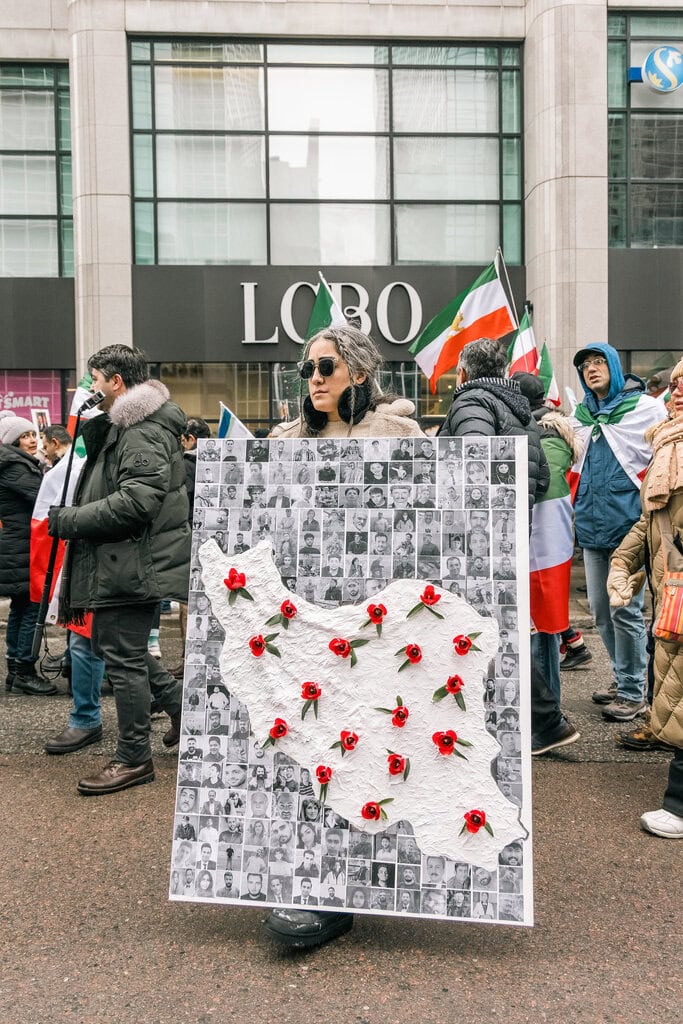
The February 14 rally in Toronto was not simply another demonstration. In scale, message, and diversity of participation, it marked a defining moment for the Iranian diaspora. At a time when political space inside Iran continues to narrow and even former allies of the government express mounting frustration, the gathering projected a powerful image of unity against repression and in favor of structural change.
Whether this rare alignment across ideological lines can be sustained remains uncertain. Diaspora politics has historically been complex and, at times, fractured. Yet for one day in Toronto, differences were set aside in favor of a collective demand. The scale of the turnout and the clarity of the message made one point unmistakable: the call for change in Iran has not diminished, it has grown louder, more organized, and more resolute.
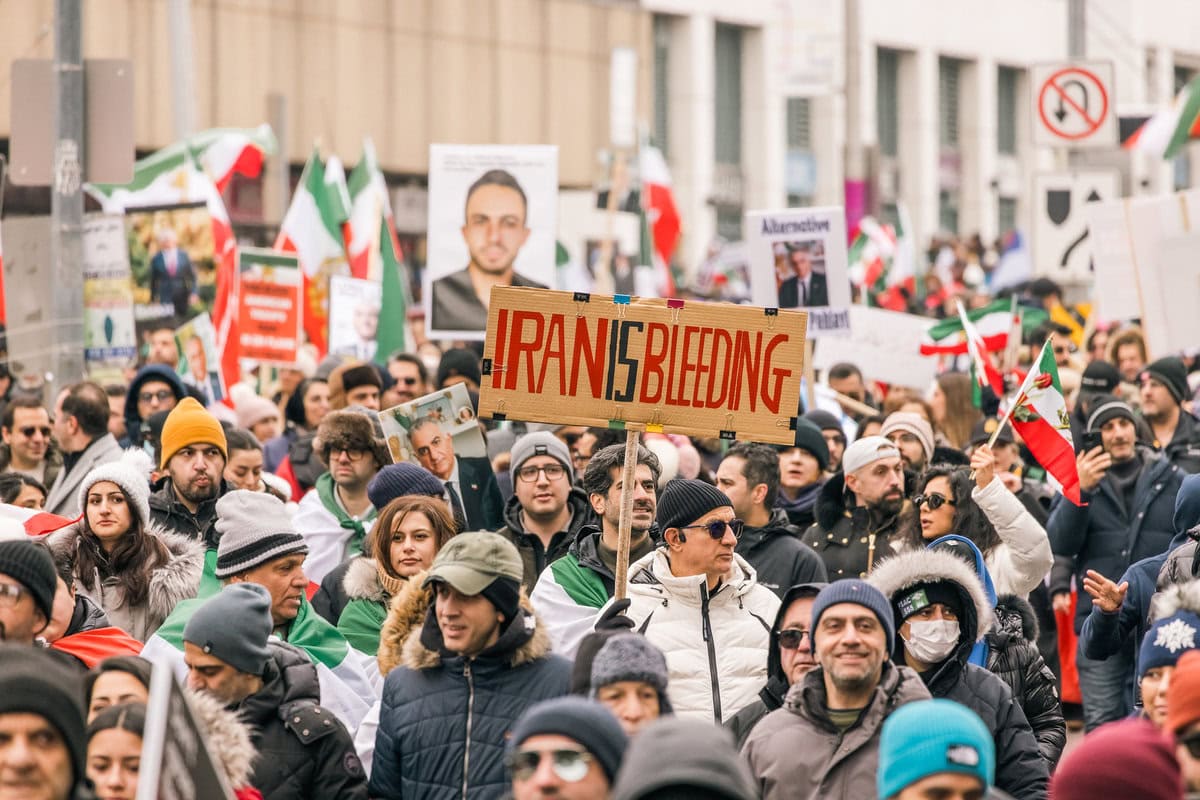
Photo by Sam Javanrouh.