
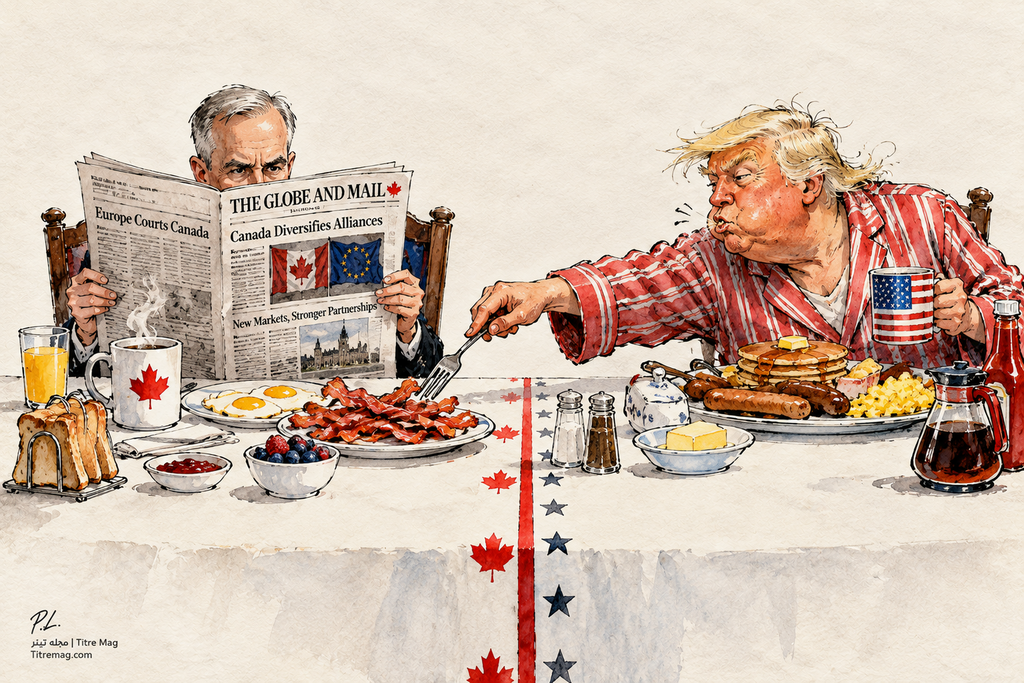
Pooyan Tabatabaei – Toronto | Titre Mag: Mark Carney this week publicly acknowledged that his government has considered the possibility of U.S. military action against Canada. This was not another joke about Canada becoming the “51st state.” In a wide-ranging interview with The New York Times, the prime minister said his government had examined the possibility of American military action on Canadian soil. Carney stressed that this was not Ottawa’s base-case scenario, but said it would be “irresponsible” for a prime minister not to consider it. The fact that such a possibility is now on the Canadian prime minister’s desk is serious enough.
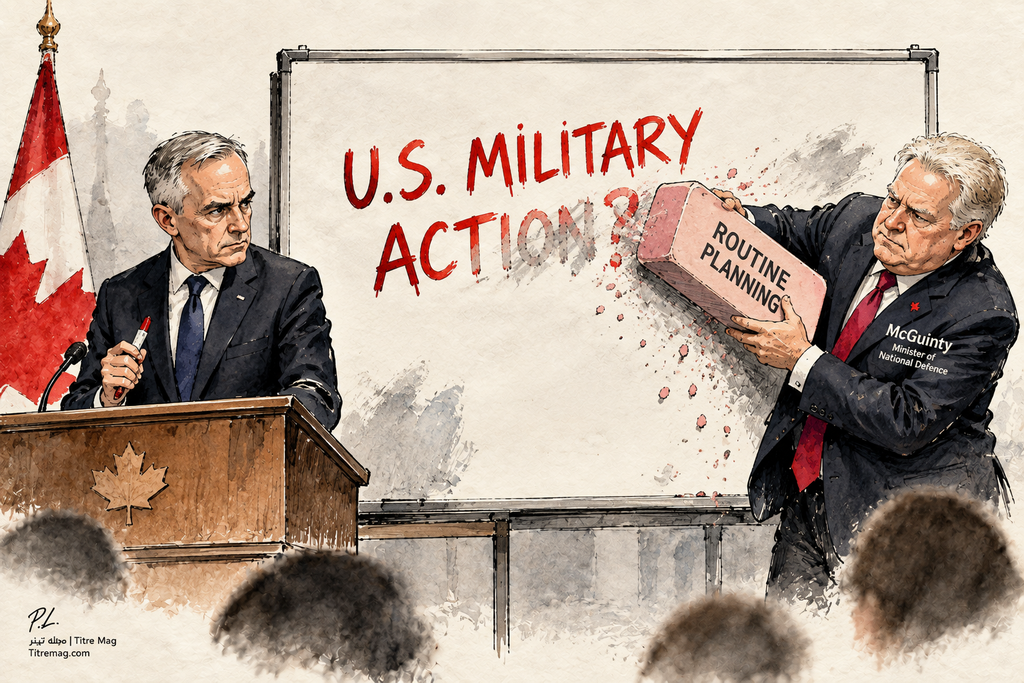
A day later, Defence Minister David McGuinty tried to lower the temperature. Militaries everywhere, he said, routinely examine a range of possible threats, and considering such scenarios is simply part of military planning. McGuinty also pointed to the extraordinarily close defence relationship between Canada and the United States, countries that have worked together for decades to defend North America. But the basic fact remained: Canada had considered the possibility of U.S. military action. The only question was how remote that possibility might be.
For Carney, after a career spent in central banking and crisis management, thinking in such terms may not be particularly unfamiliar. He described the scenario as an “extreme tail risk,” something unlikely to happen but potentially catastrophic if ignored. The logic is hardly new. Forty-two years ago, in the middle of the Cold War, Ronald Reagan’s presidential campaign reduced essentially the same idea to a much simpler image: there is a bear in the woods.
In Reagan’s famous 1984 campaign ad, a large bear wanders through a forest. The narrator says some people see the bear, while others do not. Then comes the central question: if no one can be certain, isn’t it wise to be as strong as the bear, if there is a bear? The Soviet Union is never mentioned, but there is little doubt what the bear represents. Carney’s thinking comes down to the same simple principle: if you are responsible for a country’s security, you prepare for possibilities you hope will never materialize.
That logic carries more weight when set against the changes in Canada-U.S. relations over the past two years. Donald Trump has repeatedly talked about Canada becoming the 51st state. He has ruled out using military force to annex Canada, while speaking instead about the use of “economic force.” Tariff battles and failed attempts to reach a broader trade deal have also left Ottawa facing a Washington that looks far less predictable than it once did. Canada remains a U.S. ally, but it is simultaneously looking for new markets and partnerships in Europe and Asia.
And here lies the contradiction. Few countries are as closely integrated militarily as Canada and the United States. Since 1958, the two have jointly defended the continent’s airspace through the North American Aerospace Defense Command, or NORAD. Yet a significant part of the northern defence infrastructure that supports that system sits on Canadian soil and is operated by Canada. Northern radar networks, command facilities, Canadian bases and fighter aircraft are part of Canada’s own defence capability.
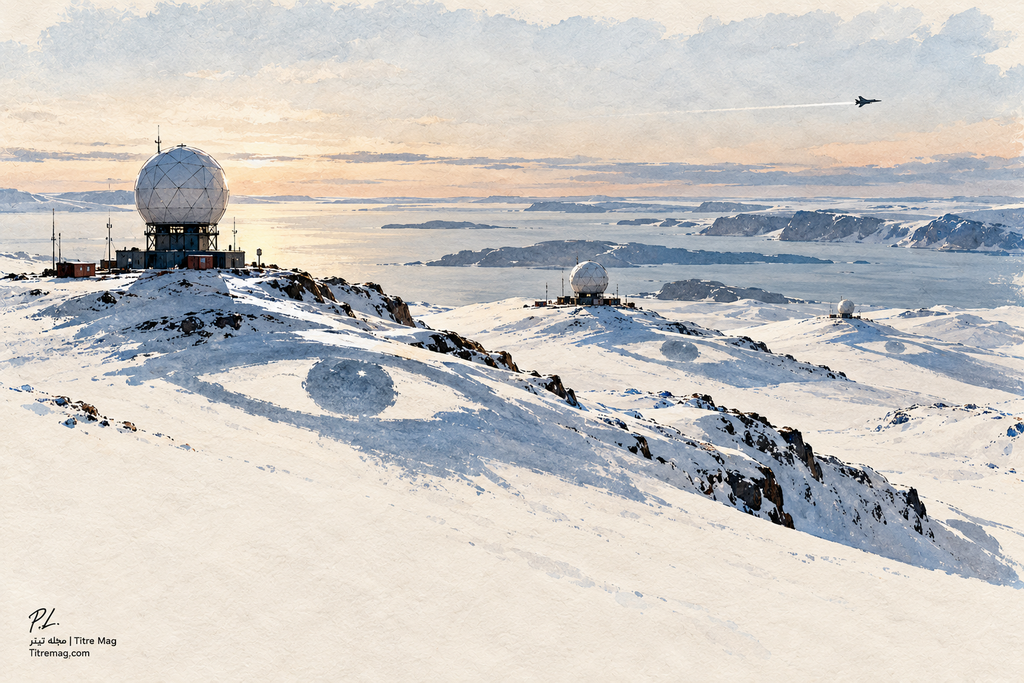
Canada is certainly no military match for the United States. But neither is it defenceless. Its immense geography, professional armed forces, NATO membership, northern radar network, military bases and alliances all form part of its defensive capacity. More importantly, Ottawa is now trying to reduce its military dependence on Washington. The Carney government wants to expand domestic defence production and deepen relationships with other partners capable of supplying more of Canada’s military needs.
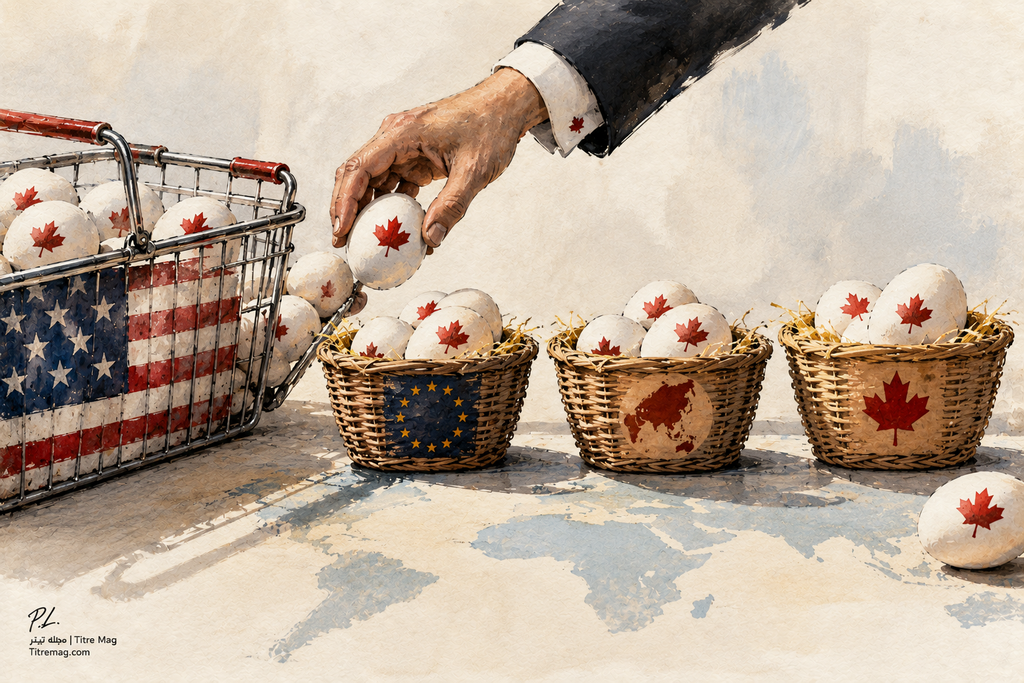
The same shift is visible in the economy. The United States remains Canada’s most important trading partner, and after decades of integration the two economies are deeply intertwined. But Canada no longer wants all its eggs in one basket. That means building closer ties with Europe and opening more doors in Asia. The neighbours remain allies. They still trade and still defend the same continental airspace. But Canada is gradually preparing for a world in which it can no longer take a predictable Washington for granted.
To understand why the mere suggestion of military conflict between these countries carries such strange weight, it helps to leave Ottawa and Washington behind and travel to one of Canada’s most familiar landscapes: Niagara.
For millions of people, Niagara means the falls, illuminated water, hotels, honeymoons and weekend getaways. But travel a short distance from the crowds along the Niagara River and you reach the wooded grounds of Queenston Heights Park. Among the trees and lawns rises a stone column that tells a very different story about this border. At its summit stands Isaac Brock, the military commander who, more than two centuries ago, fought on these heights to defend territory that would eventually become part of modern Canada.
On the morning of October 13, 1812, American troops crossed the Niagara River and seized the heights at Queenston. The British and local defenders were initially badly outnumbered. Major-General Isaac Brock, the senior British military commander in Upper Canada, rushed to Queenston when word of the attack reached him and led his forces in an attempt to retake the heights. Brock led from the front. As he moved his men toward the American positions, he was shot and killed.
But the battle did not end with his death. Indigenous warriors, British troops, Canadian militia and a group of free Canadians of African descent continued to resist until reinforcements arrived. By the end of the battle, the American force had been defeated and hundreds of its soldiers taken prisoner. The victory stopped the American attack and became one of the defining moments in the defence of Upper Canada. Brock did not live to see the outcome of that day, but his death made him one of the enduring figures of the War of 1812. Today, the 56-metre Brock’s Monument towers above the same park, with his remains interred beneath it.
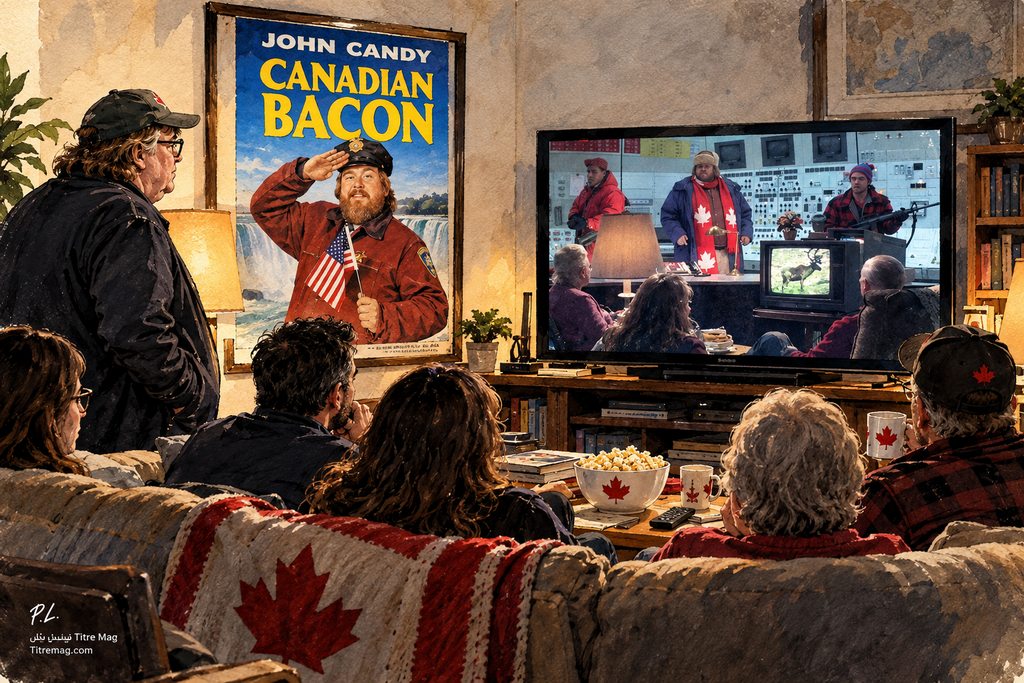
More than two centuries have passed. A border once crossed by soldiers is now crossed every day by trucks, tourists, workers and families. Canada and the United States became so close that the idea of war between them gradually left the realm of history and entered the realm of comedy. And that is precisely where Michael Moore enters the story.
In 1995, Michael Moore made Canadian Bacon, a political comedy built around an idea so implausible at the time that its very impossibility powered the joke. The Cold War is over. The U.S. economy is struggling. The president’s popularity is sinking, and the old enemy is no longer available to play its familiar role. The president needs a new adversary to revive his political fortunes. The search begins, and eventually the answer is sitting right next door: Canada. Big, close and conveniently just across the border. The propaganda machinery goes to work. Fear of Canada is manufactured, and what begins as a political game gradually spins out of control, with Americans actually crossing into Canadian territory. The absurdity of that image, America at war with Canada, was the whole joke.
In the film, the real subject is not Canada. It is politics’ need for an enemy. Fear can be manufactured. Minor differences can be magnified. Stereotypes can be turned into warning signs, and something that initially sounds ridiculous can be repeated until people begin to believe it. Moore chose Canada because, in 1995, the idea that the United States might genuinely regard its northern neighbour as an enemy seemed safely, almost reassuringly, absurd.
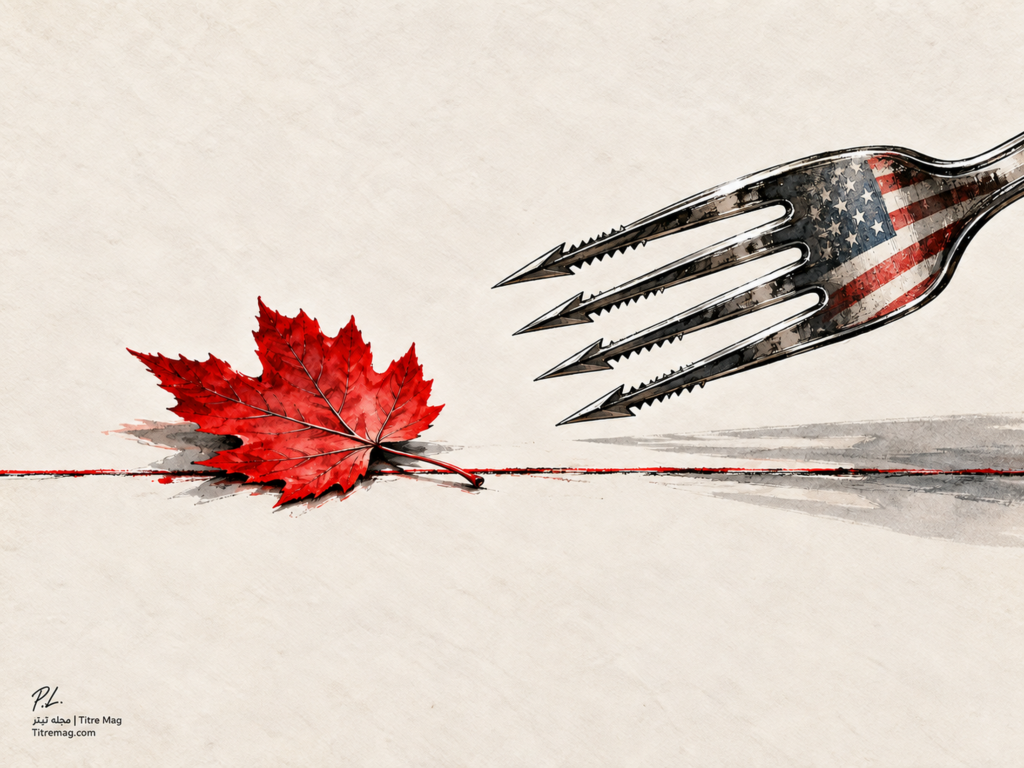 Thirty-one years later, Canadian Bacon is worth watching again. Trump’s approval rating has fallen to 32 per cent in the latest Reuters/Ipsos poll, the lowest point of his political career in that polling series. The Iran war and higher fuel prices are also weighing on the U.S. political climate. Among registered voters, Democrats led Republicans 43 to 35 per cent on the congressional ballot in the same poll. Only 38 days remain before the November 3 midterm elections, an election that could change control of Congress and reshape the political terrain for the Trump administration.
Michael Moore’s world may still be a long way from the reality of 2026. But for me, as a Canadian, one thing has changed. Where we laughed thirty-one years ago, today we might pause for a few seconds longer.