
Film Director and Film Critic
Majid Movasseghi – Titre Mag | It was Monday. I took my bicycle and headed to the cinema. As always before setting out, a small question followed me: would it rain? The air was warm, but there was always the possibility of rain, and the familiar decision of whether to bring a raincoat.
Mondays tend to be quieter at the movies, with fewer people in the theatres. But that is not really why I keep going. Why do I still prefer seeing films in a cinema when I have a small home theatre of my own? Perhaps it is the silence a cinema imposes, the kind that keeps you from reaching for your phone, pausing the film or allowing your attention to drift elsewhere. Cinema, like theatre, offers a rare opportunity to speak less and observe more. With that in mind, I entered the theatre, ready to spend three hours with Christopher Nolan’s latest film and carrying a familiar question: would this one truly draw me in?
Jean Luc Godard’s famous observation that films have a beginning, a middle and an end, though not necessarily in that order, has always made me think of Memento, which remains, in my view, Nolan’s most important film. There, the fragmentation of time was not simply a narrative device. The form emerged directly from the character’s experience. We did not merely watch a man struggle with memory loss. We experienced something of that disorientation ourselves.
Perhaps this is why I have never been entirely devoted to Nolan’s cinema. For all the success and technical brilliance of his films, I have often found them meticulously constructed rather than genuinely radical. Still, every new film offers the possibility of rediscovery. Even after decades of work, a filmmaker can surprise us by finding a new direction. It was with that possibility in mind that I sat down to watch The Odyssey. But as the film unfolded, another question gradually took over: has Nolan recreated Homer’s world through a vision distinctly his own, or has he reconstructed it with extraordinary craftsmanship?
The Odyssey is a story of return, of a man who, after years of war, must recover his home, his identity and his place in the world. Unlike Greek tragedies, which often revolve around a concentrated crisis, Homer’s epic stretches across a vast terrain of travel, time, fate and encounters with forces beyond human control. But the greatness of a story does not automatically produce greatness of vision.
There is an essential difference between retelling an ancient story and discovering something new within it. In Throne of Blood, Akira Kurosawa carried Macbeth into feudal Japan and found within it his own vision of power and fate. Pier Paolo Pasolini approached Greek myth in much the same way, filtering ancient stories through his own intellectual and cinematic world. The source remains recognizable, but something enters the work that could belong only to that filmmaker. Being an auteur does not require changing the story. It requires finding a personal way of seeing it.
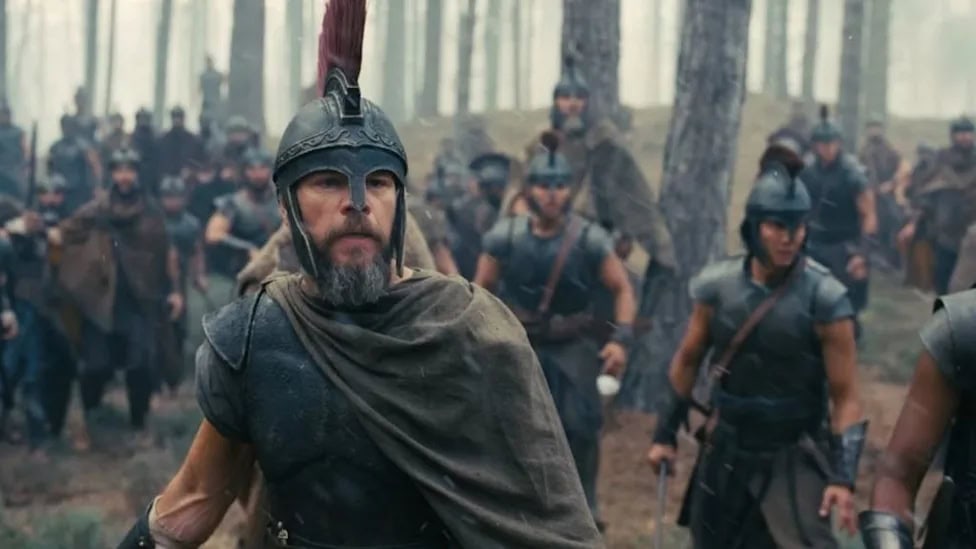
Nolan certainly makes choices intended to renew The Odyssey. Yet many of them feel closer to modernization than to a genuine reinterpretation of the myth. Homer’s world remains largely recognizable, and only rarely does it seem to have passed completely through Nolan’s particular way of seeing.
This is where Memento becomes a useful point of comparison. In that film, form grows out of character. Its structure cannot be separated from Leonard’s fractured experience of memory because the storytelling itself places us inside his condition. With The Odyssey, the question is whether form emerges just as organically from Odysseus and his world, or whether it belongs more to the formidable cinematic machinery Nolan has spent years perfecting.
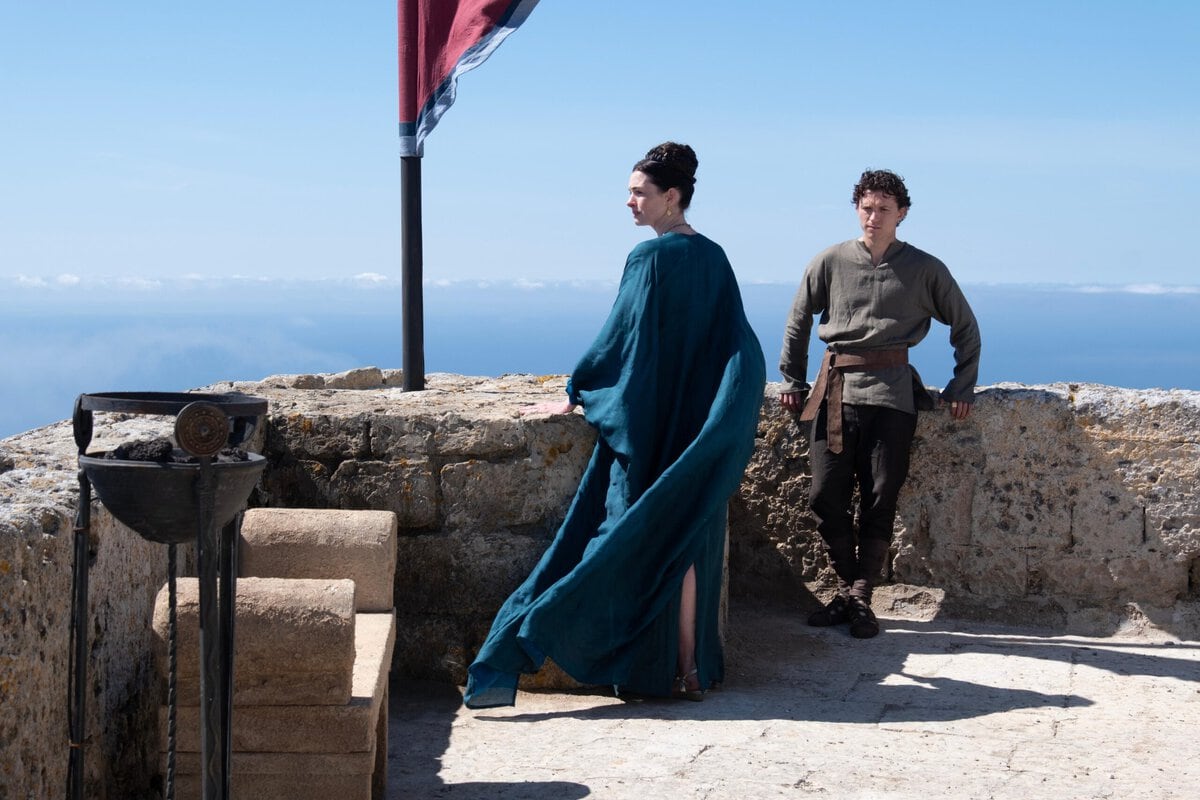
I felt this tension most strongly in the scene of recognition, when Penelope must once again believe in the man she has not seen for twenty years. Here, the question is no longer one of monsters, gods or impossible journeys. It is about trust, memory and the distance that time can create between two people. The scene contains enormous human potential, yet the film never quite conveys the full weight of those years of absence and waiting. What might have become a profound emotional reckoning feels instead more like a passage the narrative must cross.
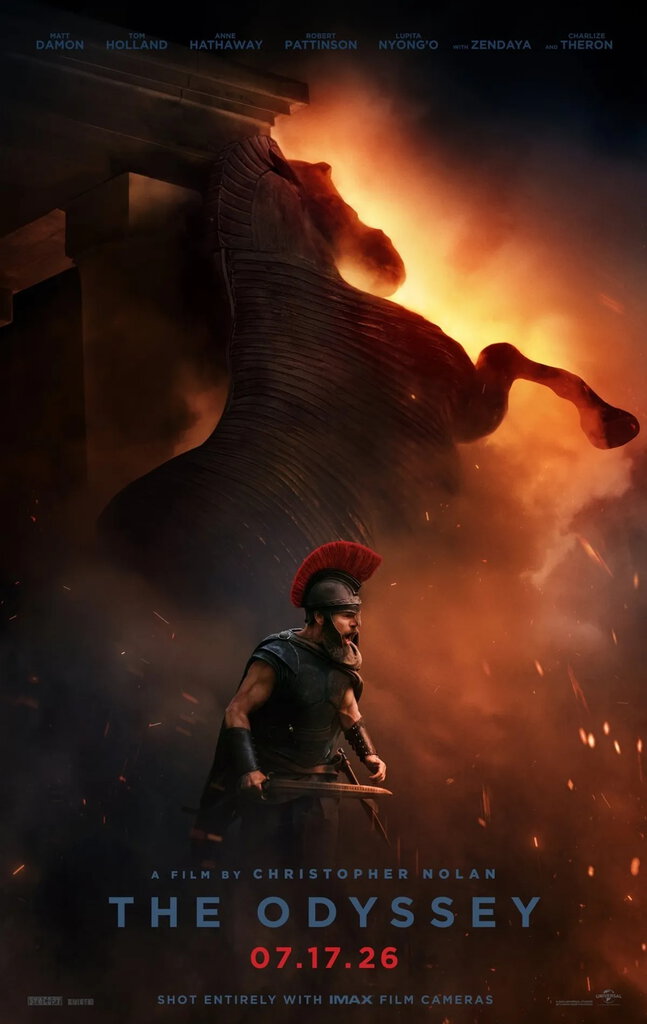
None of this diminishes the film’s remarkable craftsmanship. Matt Damon’s Odysseus carries the physical presence of a man marked by years of war, travel and loss. He is not a young, invincible hero, but an aging and wounded figure carrying the burden of his past. Damon searches convincingly for the human being inside the legend. And in a production of this scale, the sets, costumes, music and visual world surrounding him are essential to making that legend tangible.
Hoyte van Hoytema’s cinematography, Jennifer Lame’s editing and Ludwig Göransson’s music are part of the remarkably precise cinematic apparatus Nolan has built around himself in recent years. Their collaborations, across films including Tenet and Oppenheimer, have developed into a visual and rhythmic language that is immediately recognizable as Nolan’s. Yet there is a paradox here. The more flawlessly this machinery operates, the more insistent another question becomes: beneath all that astonishing craft, what is there in this Odyssey that could belong only to Nolan?
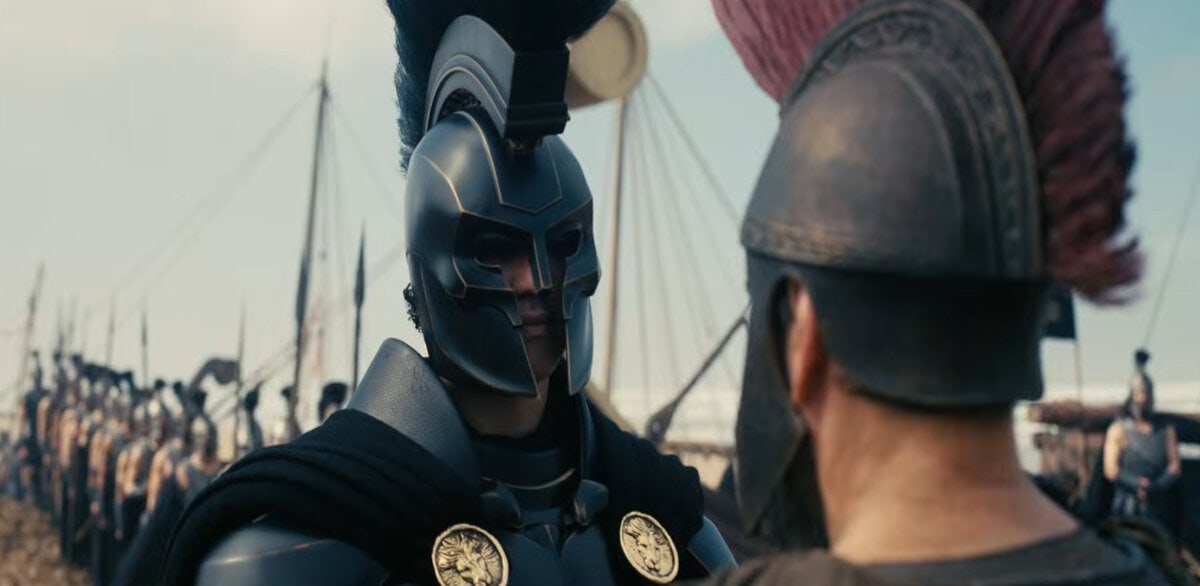
Sequences such as Odysseus entering the cave and confronting the one eyed Cyclops, along with his encounters with immense and inhuman forces, demonstrate the film’s extraordinary command of mythological spectacle. Through production design, visual effects and a remarkable sense of scale, Nolan creates a richly detailed world that repeatedly displays his command of cinematic craft.
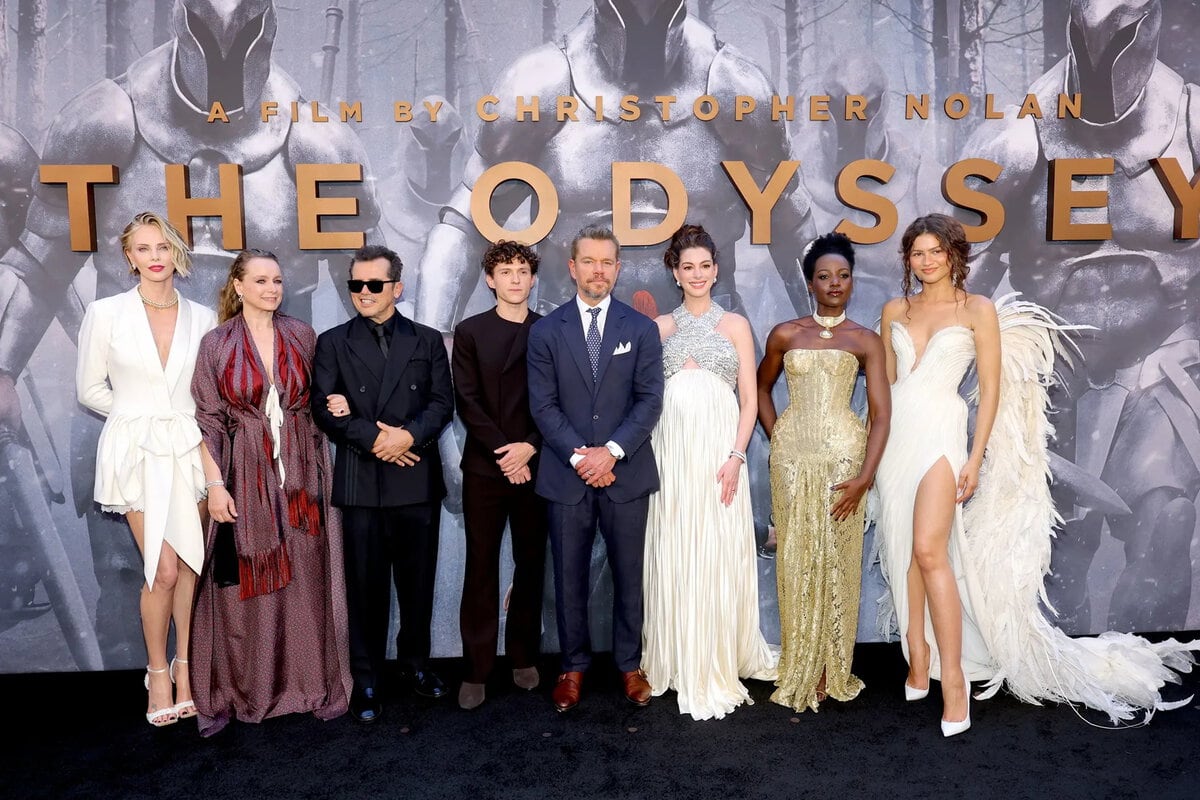
And yet one of the film’s most human moments comes not from battle or confrontation with mythical creatures, but from Odysseus’s reunion with his dog, Argos. In Homer’s epic, Argos is the only living being to recognize his master after twenty years. It is a brief but profound moment, expressing loyalty, time and loss with extraordinary simplicity.
The episode is a reminder that an intimate relationship can carry more emotional weight than the largest spectacle. The film tries to preserve that humanity, but there is an important difference. In Homer, Odysseus returns in disguise, his appearance transformed. He must be recognized anew. Here, although he is older, wounded and exhausted, he remains visibly himself. That choice diminishes some of the tension between recognition and estrangement that gives the original moment its power.
On the level of execution, there is little to seriously fault. The images are striking, the rhythm is controlled and the film’s enormous set pieces are constructed with remarkable precision. But the central question remains: can grandeur of execution, by itself, fill the space left by the absence of a genuinely new perspective?
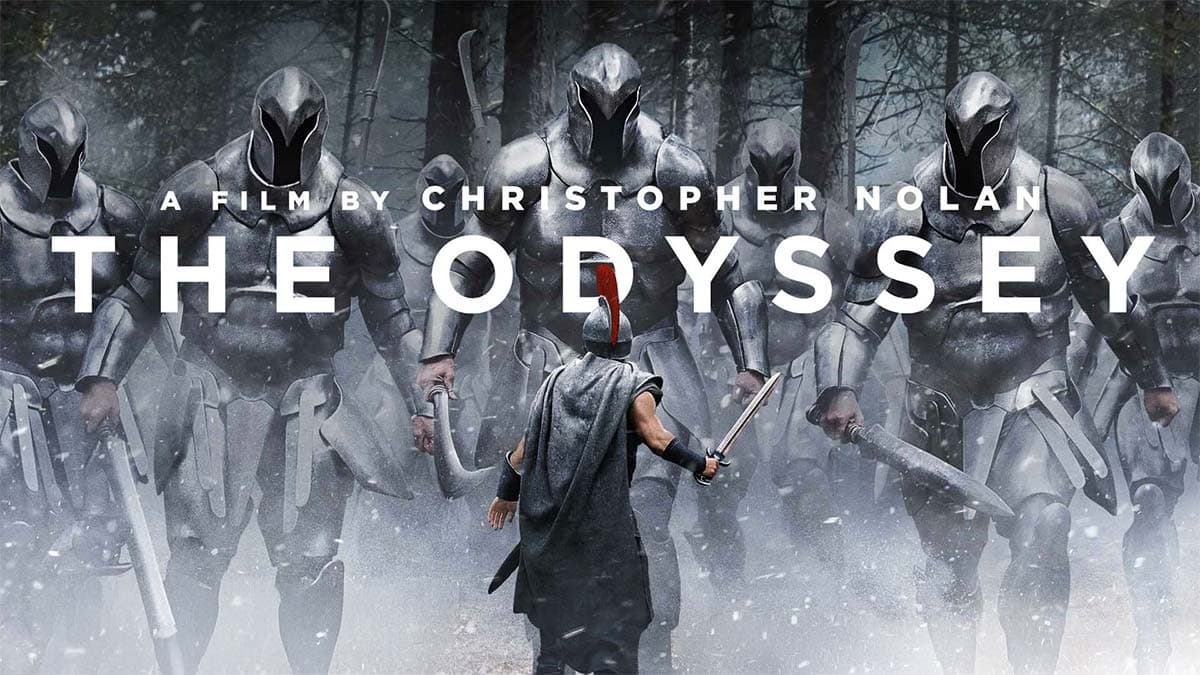
When I left the cinema, I found myself thinking more about Homer than Nolan. Perhaps that is the film’s greatest achievement and, at the same time, its greatest limitation.
Sometimes cinema tells a great story. Sometimes it makes that story new again. Nolan’s The Odyssey, at least for me, belongs closer to the former. It is a meticulous, accomplished and magnificent film that brings the grandeur of Homer’s epic vividly back before us, but rarely makes this ancient world feel as though, having passed through Nolan’s imagination, it has become something that did not exist before.