

Part of Titre Mag’s special coverage of the 2026 Toronto International Film Festival.
Pooyan Tabatabaei – Toronto | Titremag: During the days when the Toronto International Film Festival reorganizes the city around long lines, crowded theatres, and films from every corner of the world, the Discovery programme offers a chance to encounter debut features by filmmakers whose paths are still taking shape. Salvation, the first feature from Scottish filmmaker Tom Nicoll, receives its world premiere at TIFF 2026. It is a small, unassuming film that relies above all on its story and central character.
Danny is a young man from a postindustrial town in western Scotland. After completing a short course in life coaching, he decides to launch his own online business. He wants to help people who feel lost find a direction in life, even though he has yet to put his own life in order. Danny is the first victim of the dream he will later try to sell to others.
Perhaps the entire film can be understood through this contradiction. Danny is not simply selling a dream. He is its first buyer. He offers others a vision of the future and speaks of a success he has never experienced himself. It is as though he believes that if he repeats the vision often enough, performs it in front of a camera, and sells it to others, he might eventually find his own way into that life.

The film’s title draws its irony from the same contradiction. The word salvation can suggest both rescue and redemption. Yet the man who wants to show others the path to salvation is himself sinking. The more determined he becomes to play the saviour, the more willing he is to hurt others in order to save himself.
The film opens with wide shots, rich green tones, and beautiful coastal landscapes. These images symbolize the ideal life Danny wants to reach, the same life the business of life coaching promises to deliver. Open horizons, freedom, success, and the possibility of a better future form the display window meant to persuade the customer that another life is possible. Gradually, however, the film moves beyond that display and reveals what lies behind it: debt, anxiety, humiliation, and the fear of failure.
This shift is also reflected in the film’s visual form. Working within a 4:3 frame reminiscent of television, the film gradually moves from open, colourful images towards close ups and darker, more confined spaces. By the end, it returns to an image resembling the landscapes seen at the beginning, but Danny’s place within it has changed. The beautiful scenery now feels more like a backdrop against which the remains of those hollow dreams are being collected.

At the centre of this world is money. Danny’s contradiction is that the more he insists money is not his priority and that his purpose is to help people, the more completely his life falls under its control. Maintaining a professional image costs money, and when there is no income, the gap between that image and reality must be filled with debt, lies, and increasingly bad decisions. Putting money first and selling the hollow promise of a better tomorrow is the logic his more successful rival embraces much sooner. Circumstances push Danny into a corner, but the choices he makes there remain his own.
The strength of the storytelling lies in the gradual nature of this transformation. The film moves at a measured pace without becoming dull. Every failure, every lie, and every attempt to avoid reality erodes Danny’s moral boundaries a little further. Step by step, the film shows how a desire to help others can, under the pressure of money, pride, and the fear of going unseen, turn into a desire to use them. The people most deeply harmed are those closest to Danny, the ones who still believe in him. To keep the image he has created alive, he uses up the emotional and financial support of the very people who might have been his last genuine chance at salvation. Over the course of 90 minutes, an ordinary young man slowly becomes a dangerous monster.
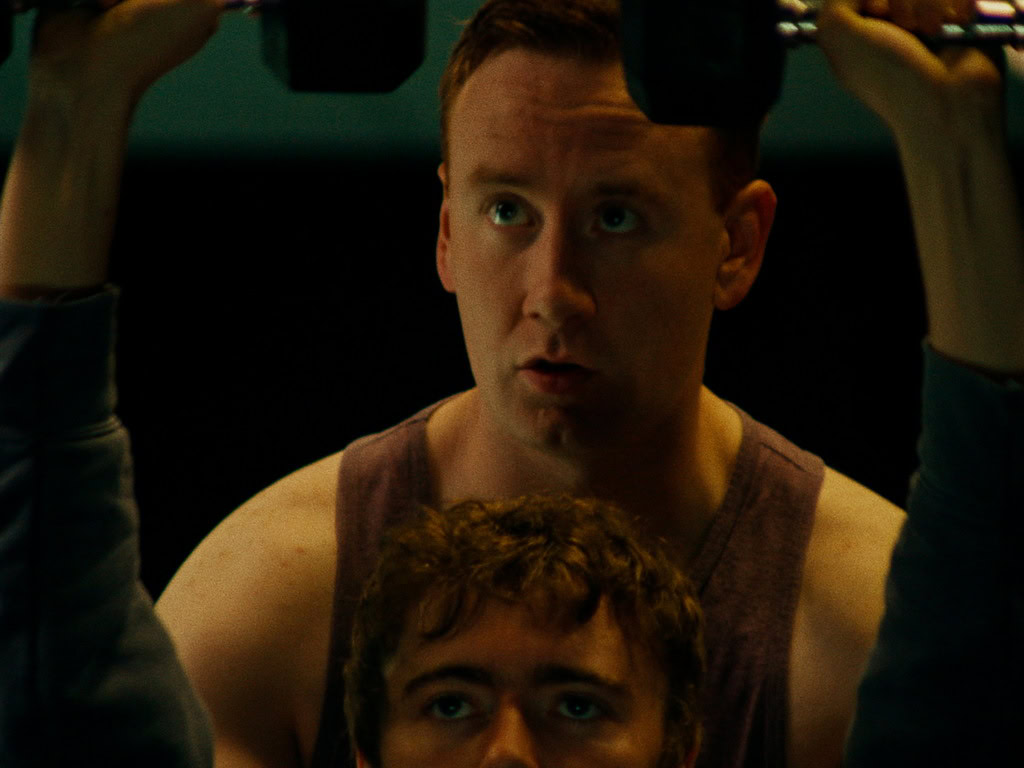
With remarkable precision, the film addresses a defining problem of our time: the hollow lives of influencers and the crisis of divided selves. The online world is no longer merely a place where dreams are sold. It has become part of the dream itself. The need to be seen gradually becomes an addiction, turning Danny into a gambler who, after every loss, returns to the game by another route and at a higher cost. His return to the internet at the end suggests that even complete collapse is not enough to break the cycle. The gamble continues. Only the table has changed.
For all that, Salvation is not visually dazzling and does not possess a particularly distinctive aesthetic. Most of its weight is carried by the dialogue, the performances, and the steady momentum of its story. The music is used so sparingly that the silences and ambient sound remain more firmly in the mind. Take away the story, and the images alone offer little to hold the viewer.
Liam Harkins gives a precise and nuanced performance that keeps Danny from becoming a one dimensional con artist. Danny’s hope, self deception, fear, and desperation remain visible at the same time. The film carries the mood of independent British cinema, with its postindustrial setting, bitter humour, and people whose dreams are larger than the opportunities their lives can offer. Salvation is a solid and worthwhile debut from Tom Nicoll, marking the arrival of a filmmaker worth watching.