
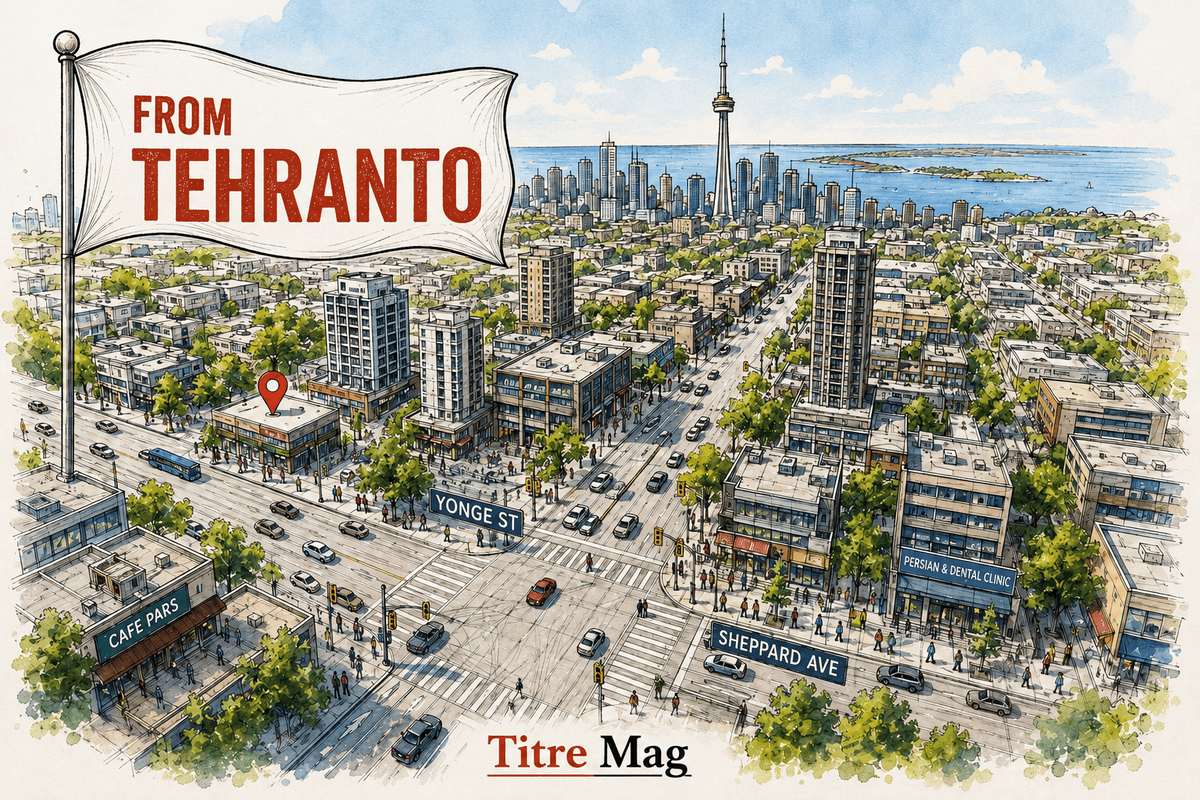
By Mina Rahimi – Toronto | Over the past two decades, the Iranian community in the Greater Toronto Area has grown dramatically, not only in numbers but in visibility. Its presence is now woven into the everyday life of the region, through businesses, professional services, media, cultural organizations and neighbourhoods stretching from North York into Thornhill, Richmond Hill and other parts of York Region. Now, part of that geography has received formal recognition.
At its June 24 and 25 meeting, Toronto City Council officially recognized the, alongside Little Jamaica, West Chinatown, Church Wellesley Village and Banglatown, as the first five districts under Toronto’s Cultural Districts Program. The decision gives an official name to something the Iranian community had been building for decades.
North York, particularly the Yonge Street corridor, emerged as one of the earliest centres of Iranian life in Toronto as immigration from Iran increased in the years following the 1979 revolution and the Iran Iraq War. Grocery stores, bakeries and restaurants appeared, followed by Persian language media, medical offices, lawyers, accountants, real estate businesses and other services. The City of Toronto describes this stretch of Yonge as the Iranian community’s oldest settlement area in the city.
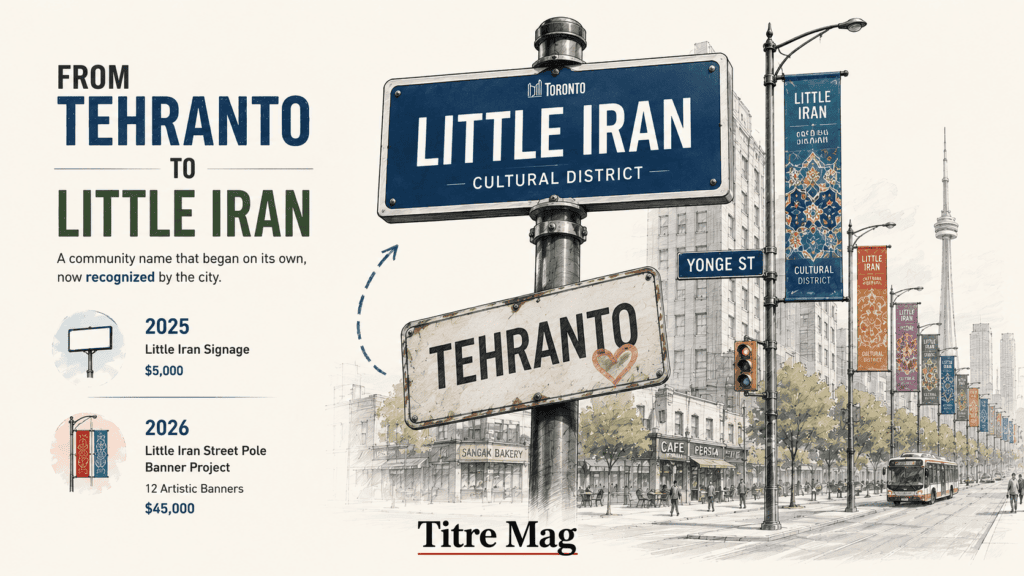
As that presence grew, Iranian Torontonians came up with a name of their own: “Tehranto,” a blend of Tehran and Toronto. It was never an official neighbourhood and never had precise boundaries. It was something more organic, a shorthand for a part of the city where Iranian life could be seen, heard and experienced. Over time, that geography moved north. Thornhill and particularly Richmond Hill developed into major centres of Iranian Canadian life.
The numbers offer some sense of that growth. According to the 2021 Census, 20,340 Richmond Hill residents reported Iranian ethnic or cultural origins, representing 10.1 per cent of the city’s population. Across the Toronto Census Metropolitan Area, Statistics Canada recorded 88,915 people reporting Iranian ethnic or cultural origins.
Those official numbers are considerably lower than estimates often heard within the community. Some unofficial estimates put the Iranian population of the GTA above 200,000 and as high as approximately 250,000. That figure should not be confused with census data. Citizenship, birthplace, language and ethnic or cultural origin measure different things, and there is no authoritative government source confirming the 250,000 estimate.
The road to official recognition began well before this month’s vote. Toronto City Council supported exploring an Iranian cultural district in 2023. In 2025, it approved Little Iran street signs along a section of Yonge Street. This year, the city also allocated $45,000 toward a project involving 12 street pole banners featuring work by Iranian Canadian artists.
The Cultural District designation does not create a new administrative district, nor does it automatically give Iranian businesses special financial benefits. Its immediate importance lies in recognition, and in the city’s broader effort to preserve culturally significant neighbourhoods and the businesses, organizations and institutions that give them their character. But Little Iran was not created by a City Council vote.
It was built over decades by immigrants who opened businesses, established institutions, raised families and gradually changed a part of Toronto into a place where Iranian culture became part of the city’s everyday life. Tehranto existed long before it appeared in municipal documents. Toronto has now formally recognized what the community had already written into the geography of the city.
This is a condensed English version of the original Persian language article.