
Part of Titre Mag’s special coverage of the 2026 Toronto International Film Festival.
Pooyan Tabatabaei – Toronto | Titremag: On the third day of the festival, I turn to John Trengove’s The Smell of Apples, making its world premiere in TIFF’s Platform programme. Unfolding across five acts, each covering a single day, the film begins with something small: an old fishing rod, passed from grandfather to grandson, goes missing, and a dark-skinned boy is accused of stealing it. It is the first stone dropped into the calm sea of a family’s life. What matters is not the mystery of the missing rod, but the ripples it sends through the family.
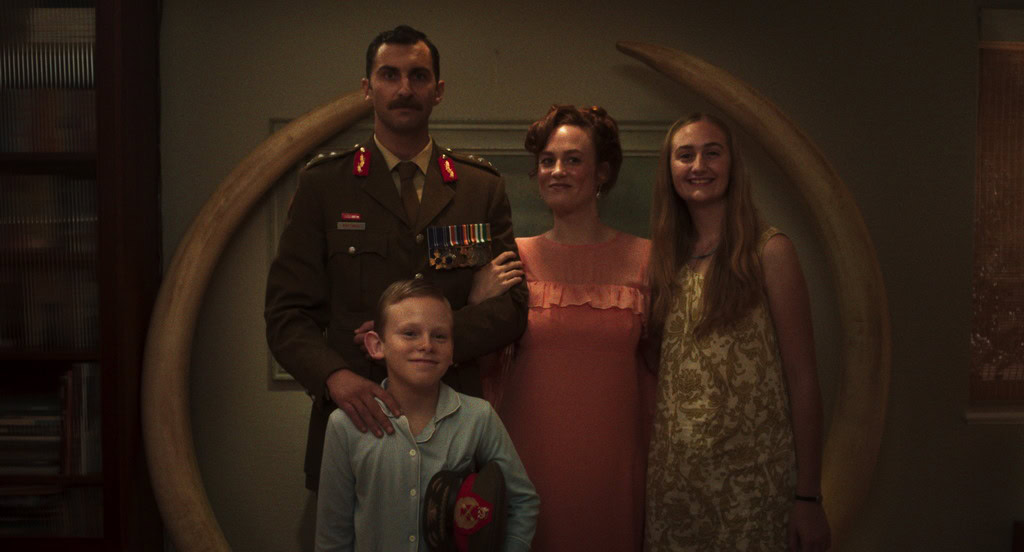
Adapted from Mark Behr’s novel, the story takes us to Cape Town in 1974 and into the home of a white family living under apartheid. The father, a high-ranking general in the military, stands at the centre of the world that 11-year-old Marnus has known. The arrival of an unexpected guest opens the door to another world, one of soldiers, politics and the possibility of war. There is constant talk of a war that may be about to begin outside, but the real war is slowly taking shape within the family itself.
The Smell of Apples is a film of small accumulations. A distance that grows slightly wider, a silence that lasts a little longer, a glance whose meaning is not immediately clear, and a boy who sees a little more with each passing day. The house remains the same and so do the people in it, yet something in the order that has held them together is quietly shifting.
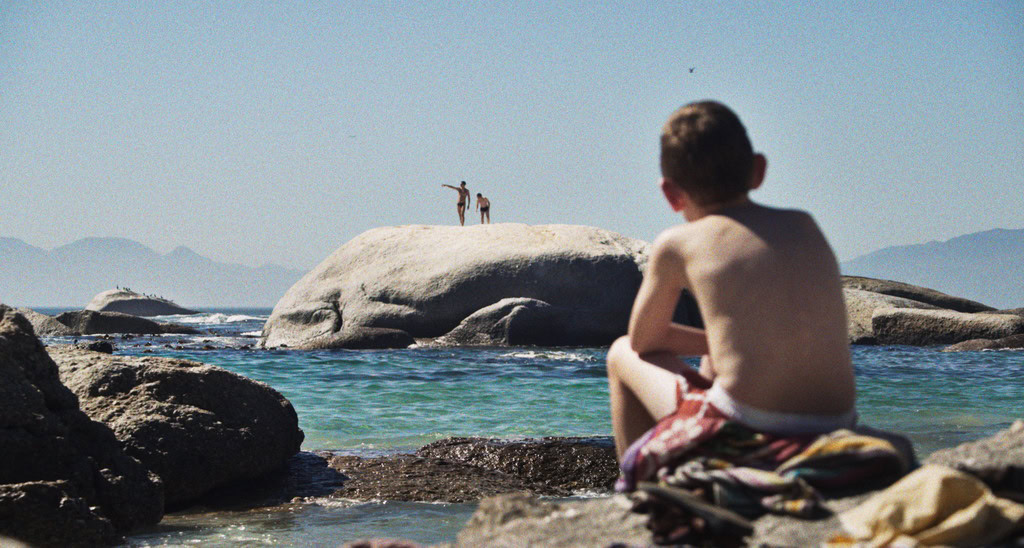
At the centre of this movement is a boy who is more observer than agent. He watches, he listens, and he is constantly present where perhaps he is not supposed to be. Several times he is called a “spy” and the word is remarkably precise. He is the little spy in the world of adults, a boy who sees things he should not see and hears things he is still too young to fully understand. The film’s structure mirrors his position. We are not given complete information. We gather the pieces alongside him. Gradually, the distance between seeing and understanding begins to close, until simply remaining a spectator is no longer possible.
The most important part of this transformation takes place in his relationship with his father. At first, his father is the anchor of his world, a commanding, military, self-assured man whom the boy loves and trusts. Trengove does not destroy this image with a single revelation. He chips away at it, little by little. The distance grows between the father Marnus has constructed in his mind and the man standing in front of him. From this perspective, The Smell of Apples is less a story about discovering a secret than about losing an image, and about inheriting a world.
The fishing rod was left behind by the grandfather. Two large elephant tusks in the house have also survived from that generation. The past is not merely a memory in this home. It has a physical presence. But not every inheritance can be held in your hands. Alongside these objects, ideas about power, masculinity, obedience, violence and the boundary between “us” and “them” are also passed from one generation to the next.
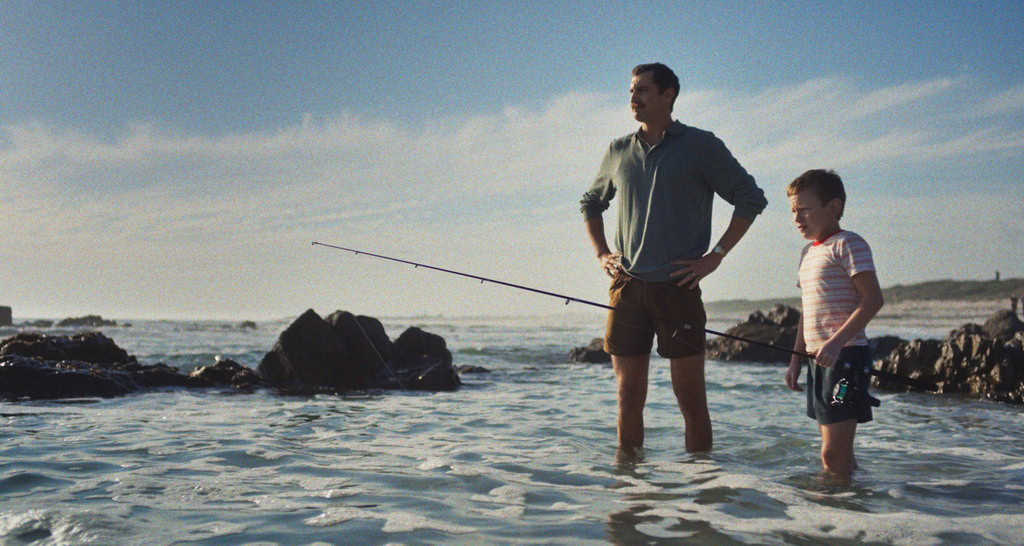
The father is preparing his son to enter the world to which he himself belongs. The fishing scene is perhaps the clearest example of this transmission. What appears to be the teaching of a simple skill gradually becomes a lesson in a particular idea of what it means to be a man. At one point, the father tells his son that sometimes doing the wrong thing can be the right thing if it protects the people we love. Elsewhere, he tells him, “What I do, I do it for you.” But Marnus is receiving two very different lessons at once: what his father tells him about the world, and what he sees of that same world with his own eyes.
This is where apartheid moves beyond the film’s historical background and enters the fabric of its relationships. Inside the house, the power relations of the world outside are reproduced in miniature. Everyone has a designated place. One person gives orders while another serves. One person’s words carry greater weight, while someone else may be forced to pay the price for them. Violence in The Smell of Apples does not begin with a blow. It has been present much earlier, embedded in the seemingly natural order of these relationships.
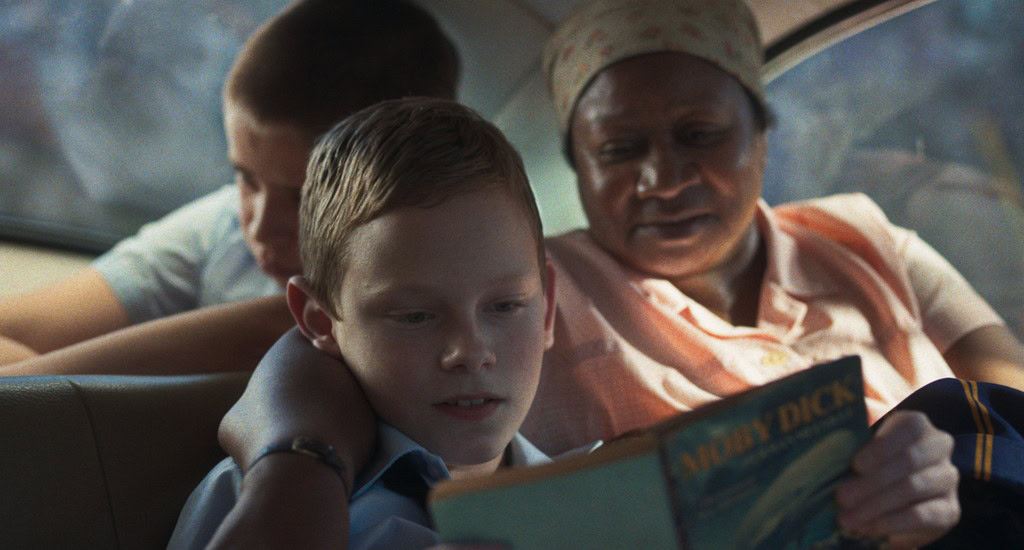
This is what gives the childish accusation at the beginning of the film its significance. Once a child’s words enter such a structure of power, they are no longer simply the words of a child. Marnus gradually realizes that his own position can have consequences for someone else. That realization also changes his warm relationship with the dark-skinned woman who works in the family home. Their easy intimacy gives way to shame and guilt, and Trengove does not need explanation to convey it. An embrace and wordless tears tell us almost everything we need to know.
But Marnus is not the only one who changes. At the beginning, the family has a clearly defined order. The father occupies the centre of power, the mother exists within the established structure of the home, and the children inhabit a world whose rules seem to have been written long before them. The first visible sign of change is physical: the mother cuts her hair. A seemingly simple act coincides with deeper shifts in her behaviour and in the relationships within the family. It is as though something that has been moving beneath the family’s skin finally finds its way to the surface. The family structure can remain intact even when the relationships within it are no longer what they once were. What cannot so easily be restored is the way the people inside that structure see one another.
One of the finest achievements of The Smell of Apples is the distance it creates between what we see and what we feel while watching it. The images are calm, beautiful and striking. The frames often contain no obvious sign of danger, yet we are not at ease, and a persistent anxiety moves beneath the surface of the image. This is not simply beautiful cinematography. The film’s form has become inseparable from the world it depicts. Just as the house and the society surrounding it appear to operate according to an established order, the frames themselves are composed and controlled. The stillness of a frame, the distance between two people, or a silence where a sentence might have been all transfer pressure from the image to the viewer, while the mise-en-scène and the positioning of characters within the frame become part of the storytelling itself. Before the film shows us violence, it makes us feel its presence in our own bodies.
One of the few moments when this world becomes more explicit comes with the projection of images from the past, as family photographs appear alongside images of war and violence. For a moment, the family album and the archive of war meet on the same screen. The private world of the family and the violence outside it can no longer be easily separated.
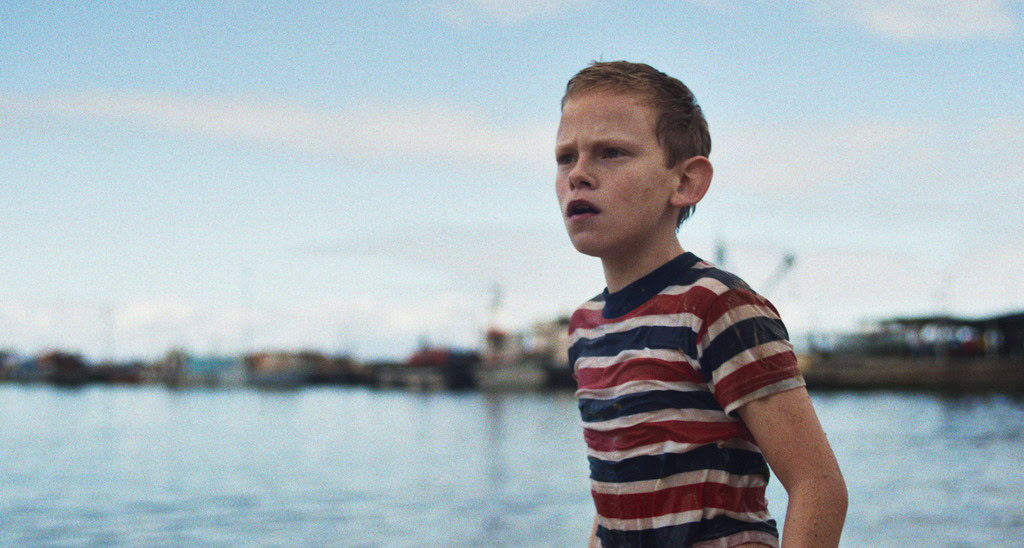
At the centre of all this, the boy is no longer the observer we met at the beginning. He now sees from another angle the world he was once expected to inherit from his father. The young actor’s performance is crucial to sustaining this journey. Much of his transformation takes place without explanation, simply in the way he looks. Curiosity gives way to doubt, and understanding takes something away from the ease of his childhood. On the other side of that relationship, the father remains human and believable enough for us to understand why his son once saw him as a hero. Had he been presented simply as a monster from the beginning, their relationship, and much of the film’s emotional complexity, would have been lost.
The Smell of Apples is beautiful and quiet, yet deeply unsettling. Its story begins simply, but Trengove allows its layers to reveal themselves one by one. The film trusts silence. It trusts the gaze. More importantly, it trusts its audience. It does not explain everything because it does not need to. The images remain calm even when the world within them no longer is. Perhaps that contradiction is what lingers most: a beauty that holds the eye, and an unease that remains in the body long after the images have faded.