
Pooyan Tabatabaei – Toronto | Titre Mag: When festival season arrives, King Street West feels different. For a few days, this part of downtown Toronto begins to move to the rhythm of cinema. Lines form outside theatres, journalists rush from one screening to the next, filmmakers and actors move through the crowds, and audiences spill onto the sidewalk already debating the films they have just seen. TIFF changes the mood of Toronto for those few days, and I have always loved being part of that energy.
For me, the festival carries another layer of meaning. It takes place in my own city, and over the years I have covered it closely as a journalist. I have watched films, filed stories, and spoken with filmmakers, actors and fellow journalists. This year brings that familiar opportunity again: several days spent moving between films and people who have come to Toronto from around the world because of cinema.
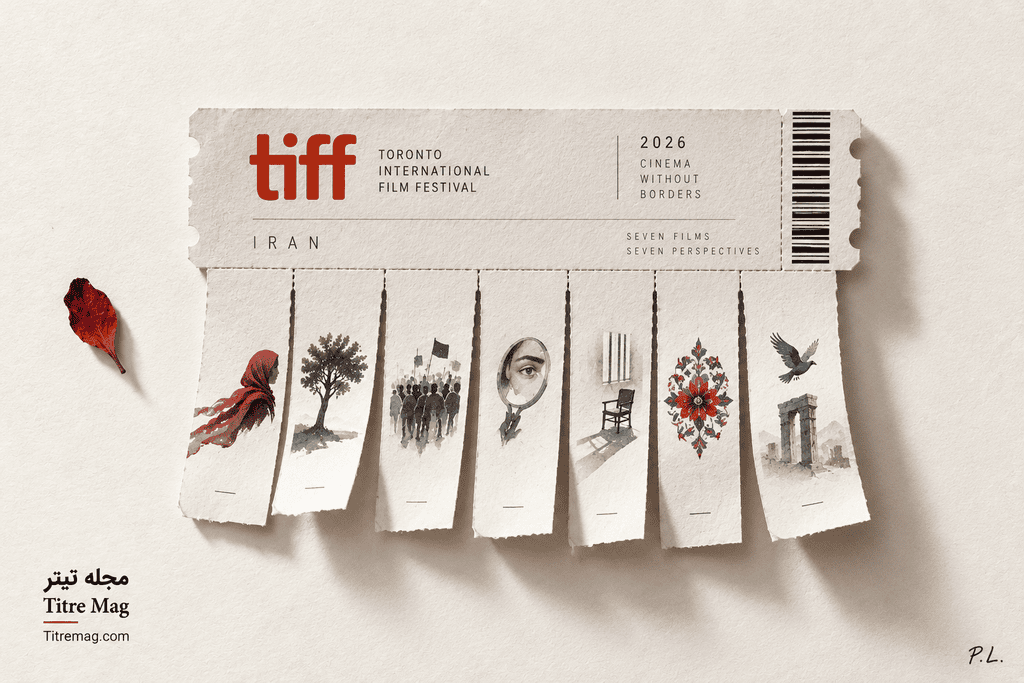
For audiences interested in Iranian cinema, TIFF 2026 offers another reason to pay attention. Across the festival’s different programs are seven works by Iranian filmmakers, or filmmakers whose work is closely connected to Iran. They do not belong to the same generation, they do not share a common cinematic language, and not all of their films were made in Iran. From narrative features and documentaries to shorts and experimental cinema, each approaches Iran from a different direction. Of the seven, the film I am most curious to see is the first feature by Ghasideh Golmakani.
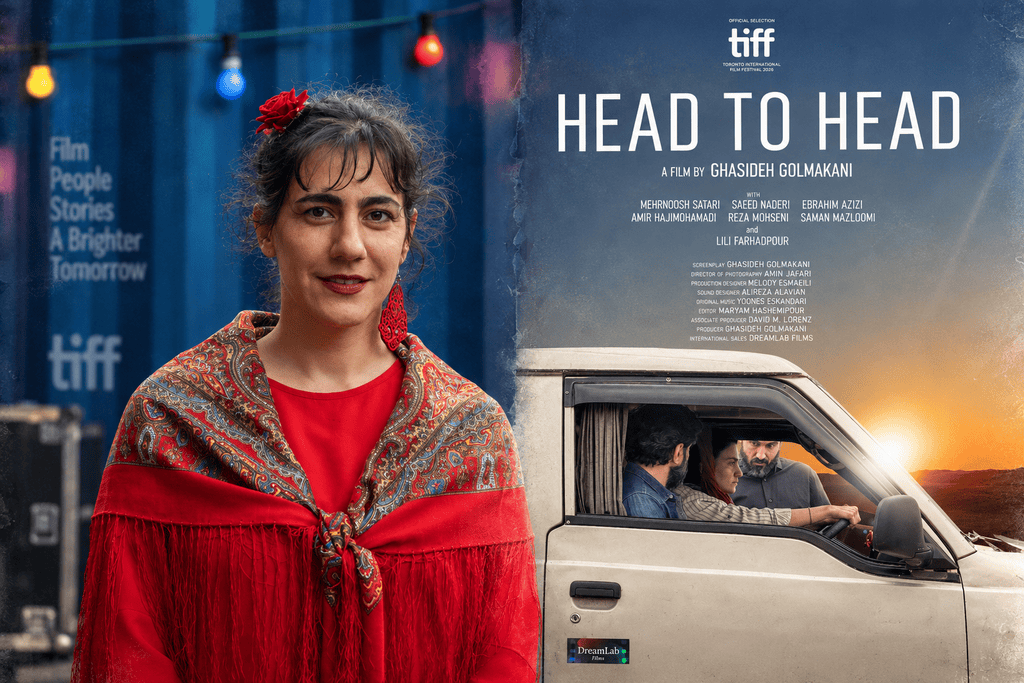
Ghasideh and Her First Feature
I first met Ghasideh years ago at the Dhaka International Film Festival in Bangladesh. I was serving on the jury and she was attending as a festival guest. We had a chance to talk briefly, and what stayed with me was the impression of a curious and inventive filmmaker, someone with a distinct point of view and little fear of experimentation. Seeing her name in the TIFF program all these years later, now with her first narrative feature, carries a particular resonance for me.
The Golmakani name is familiar to generations of Iranian cinephiles. Ghasideh is the daughter of Houshang Golmakani, the veteran film critic, journalist and co-founder of Film magazine. Particularly in the years before the internet, the magazine was one of the most important windows onto Iranian and international cinema for serious film audiences in Iran.
Ghasideh, however, has built a path of her own. After studying in Paris and returning to Iran, she turned to documentary and short filmmaking, repeatedly exploring the lives of women, everyday forms of violence and structures of power. In Limbo, Iranian-Canadian actor Levon Haftvan plays a former Iraqi sniper who has tattooed the names of the people he killed during the war onto his body. Shorts including Horn and Online Shopping approached women’s lives and social pressures from other angles. After years of working in short-form cinema, Golmakani has now made the transition to her first feature.
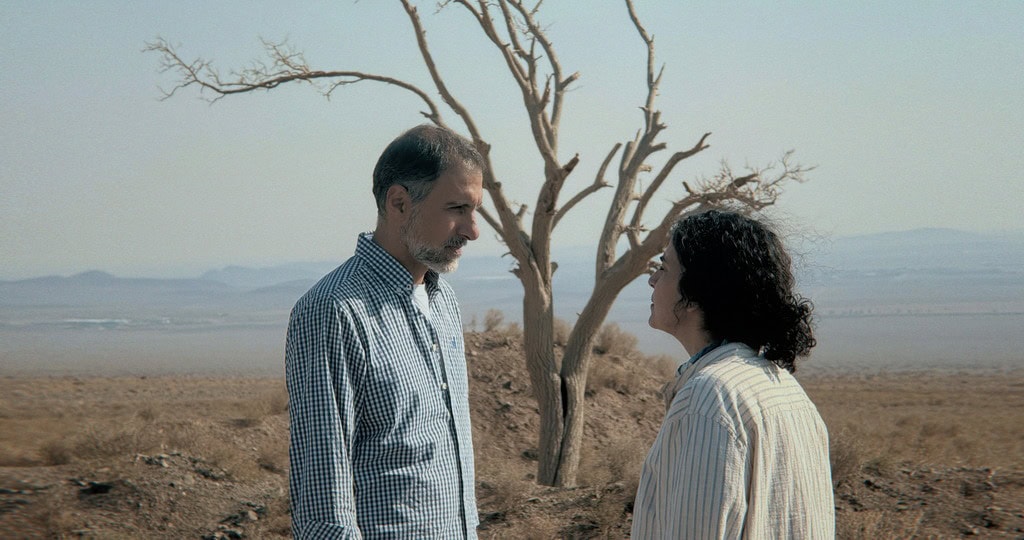
Head to Head and Reversing the Roles
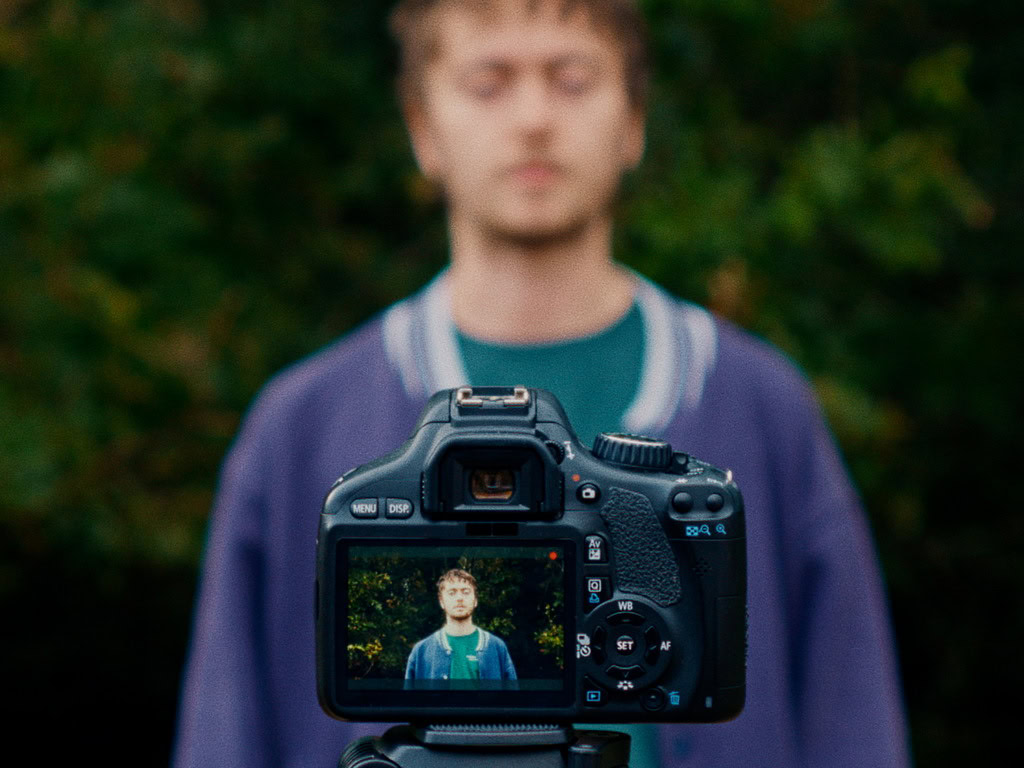
Head to Head, Ghasideh Golmakani’s first narrative feature, is an Iran-Germany co-production receiving its world premiere at TIFF. The film follows Bahar, a writer-director who makes an unusual decision for her new production: the male actors must wear skirts and headscarves. Resistance follows, and what initially appears to be a dispute over costume gradually becomes the film’s central conflict.
Golmakani turns the usual arrangement on its head. Men who have never had to experience compulsory dress codes on their own bodies are suddenly required to live within one. That reversal becomes the source of the film’s dark humour, but also the mechanism through which it examines coercion, gender and power.
Whether an idea this pointed can sustain a feature-length film is something worth considering after seeing Head to Head. For me, though, there is also a more personal curiosity. I met Ghasideh in Dhaka at a very different point in her career. In Toronto, I want to see where that journey has taken her.
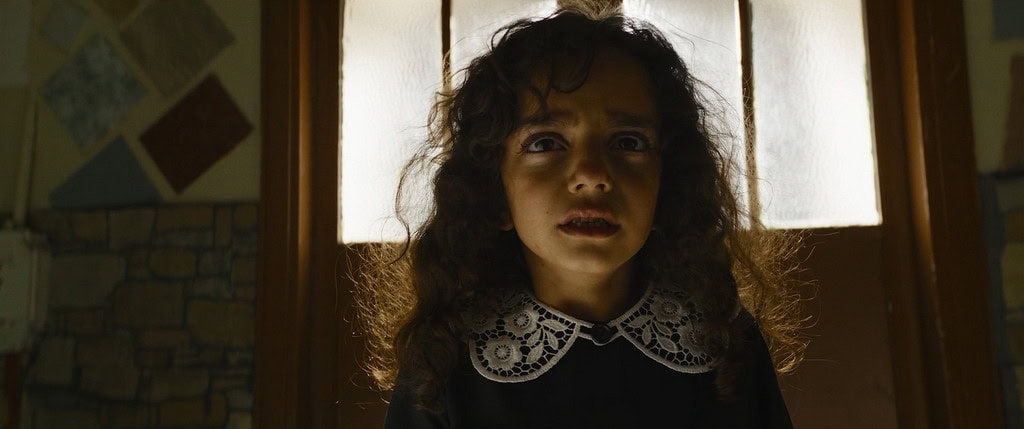
Bahman Ghobadi Returns to Toronto
At a very different point in his career stands Bahman Ghobadi. If Golmakani arrives in Toronto with her first feature, Ghobadi has been a major presence in Kurdish and Iranian cinema on the international festival circuit for more than two decades.
His first feature, A Time for Drunken Horses, introduced his filmmaking to international audiences in 2000 through its stark portrayal of Kurdish children living along the Iran-Iraq border. Toronto has been part of Ghobadi’s international journey almost from the beginning. A Time for Drunken Horses screened at TIFF in 2000, and six years later he returned with Half Moon.
Across films such as A Time for Drunken Horses, Turtles Can Fly and No One Knows About Persian Cats, Ghobadi has repeatedly returned to Kurdistan, borders, war, displacement and people whose lives are shaped by political and geographical forces beyond their control. Social reality has usually been the starting point of his cinema, even when his films have moved toward music, humour or allegory.
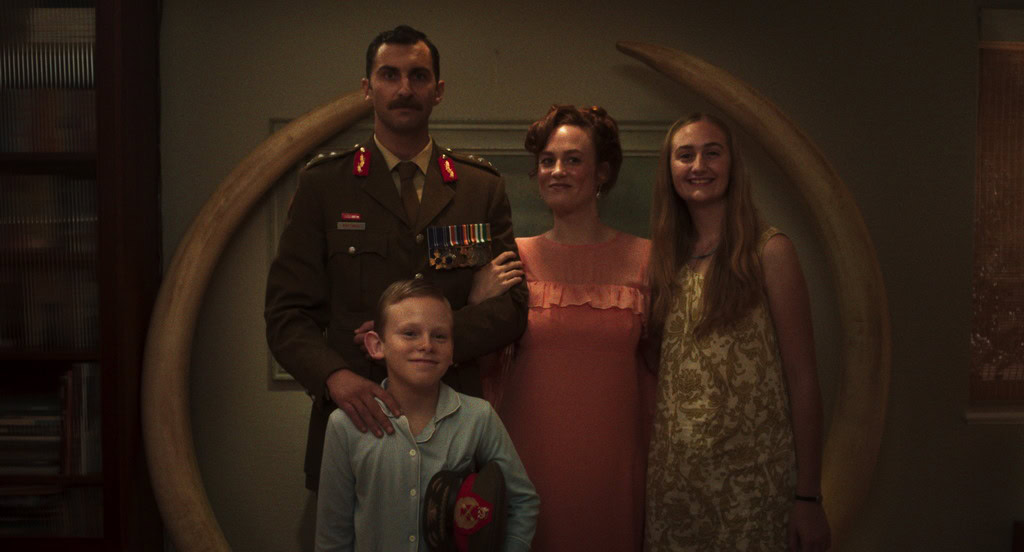
That history makes his new film, Trees Are Watching, particularly intriguing. Starring Eva Green, it follows Darya, a writer who returns to her hometown with her deaf daughter and gradually finds the past intruding on the present. For a director associated so strongly with social realism, war and Kurdish life, a move toward the territory of psychological thriller and horror represents a notable shift.
Trees Are Watching will have its world premiere at TIFF. The film is a Turkish production, an important distinction: this is a new work by an Iranian Kurdish filmmaker, rather than an Iranian production. One of the most interesting questions may be whether Ghobadi has truly moved away from his familiar cinematic world, or simply found a different genre through which to explore some of the same concerns.
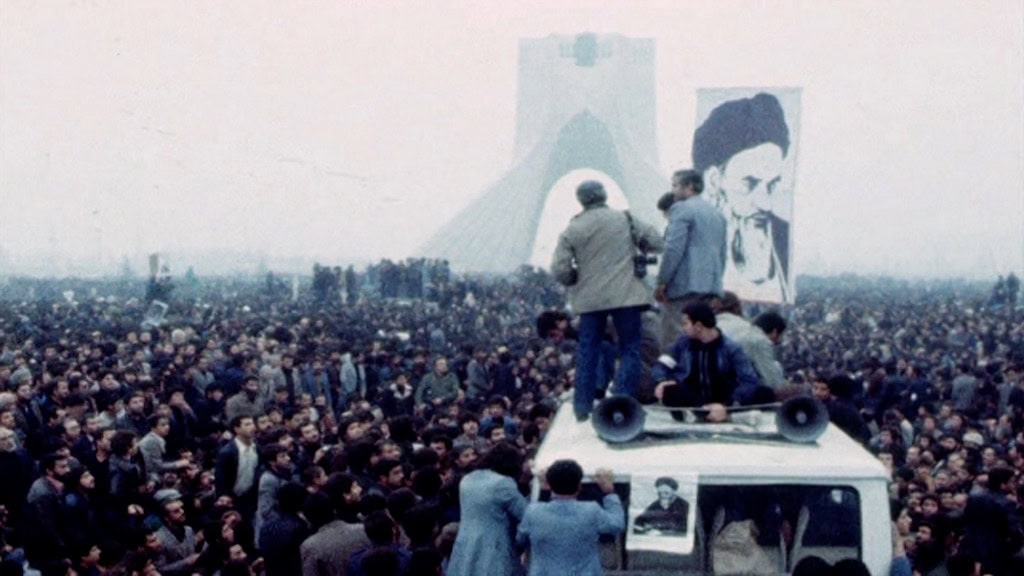
Pegah Ahangarani From Cannes to Toronto
Pegah Ahangarani arrives at TIFF with Rehearsals for a Revolution, a film that had already attracted considerable attention before reaching Toronto. It screened in the Special Screenings program at Cannes in 2026 and received the L’Œil d’Or, or Golden Eye, for Best Documentary. Its Toronto appearance is the film’s Canadian premiere.
The film also marks an important stage in Ahangarani’s evolution as a filmmaker. Long known to Iranian audiences as an actor, she had been making documentaries alongside her acting career for years. Rehearsals for a Revolution is her first feature documentary and brings that work onto a much larger international stage.
Ahangarani’s own life is inseparable from some of the history she examines. Once a prominent actor working inside Iran, she was sentenced to 18 months in prison in 2013 and has lived in the United Kingdom as a refugee since 2022. Her physical distance from Iran therefore becomes more than a biographical detail. It shapes the perspective of a filmmaker looking back at a country she has left, but whose history remains embedded in her own memory.
Structured around five portraits of relatives and mentors, the film combines family Super 8 footage, images of street protests, newspapers, online videos, animation and recorded voices to retrace more than four decades of Iranian history. The result exists somewhere between a family album and a political archive, with personal memory and collective history continually crossing into one another.
That may be the film’s most compelling choice. History here is not simply a sequence of dates, governments and headlines. It enters the home, settles into family memory and is carried forward by the next generation. Rehearsals for a Revolution is therefore as much about the memory of people who have left Iran as it is about contemporary Iranian history itself, and about how leaving a country does not necessarily mean leaving its past behind.
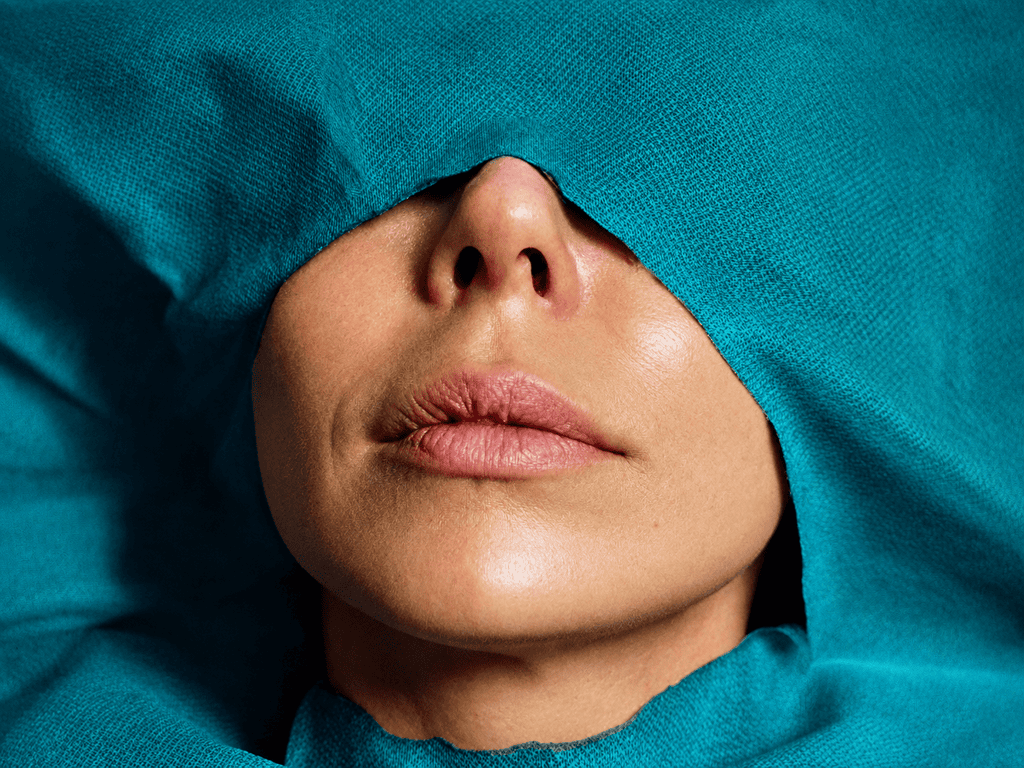
Tehran in the Mirror of Beauty
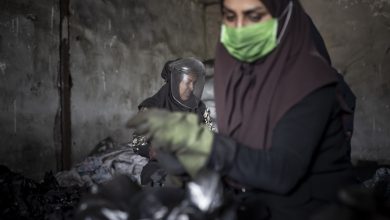
In the documentary Tehran, Under the Skin, Afsaneh Salari takes her camera inside Tehran’s cosmetic surgery clinics. Surgery, however, is less the film’s destination than its point of entry. Behind decisions to alter a face or body are larger questions about beauty, social pressure, the gaze of others and the ability to make choices about one’s own body.
Using cosmetic clinics as a window onto Tehran allows Salari to move away from the images most commonly used to explain Iranian society to international audiences. This time, there are no politicians at the centre of the frame, and neither the street nor political demonstrations provide the film’s primary arena. Instead, people make decisions about their bodies in front of mirrors and beneath the clinical lights of examination rooms. A seemingly private space gradually becomes a social one.
Understanding a society does not always require pointing a camera at politicians or protests. Sometimes a waiting room, a mirror and a person deciding to change their appearance can reveal things that disappear amid louder news images. In that sense, Under the Skin is more than a title about surgery. The film attempts to move beyond Tehran’s visible surface toward some of the anxieties, desires and contradictions that exist underneath it.
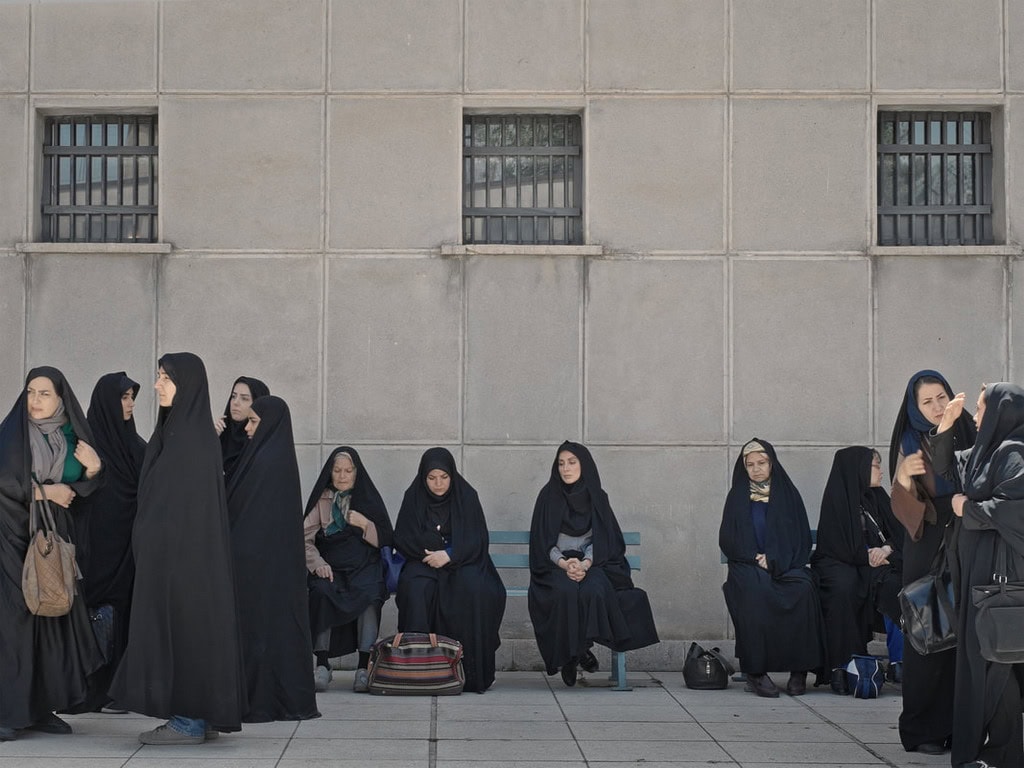
A Sweet Day and the Memory of Prison
Omid Abdollahi drew the idea for his short film A Sweet Day from his own childhood memories, particularly the days when he accompanied his mother to visit his imprisoned father. Years later, those waiting rooms and the families living with the absence of someone they loved became the basis for an 18-minute film. It follows a young woman who, after a long separation, is given the opportunity for a private visit with her imprisoned husband. Within the cold institutional space of a prison, she tries briefly to reconstruct something resembling their shared life.
The film screened at Locarno before arriving in Toronto. A Sweet Day does not look at prison only through the experience of the person behind bars. It turns instead toward those who remain outside and yet carry part of the punishment with them.
Two Experimental Perspectives
Two works in TIFF’s Wavelengths program broaden the Iranian presence at this year’s festival beyond conventional narrative and documentary filmmaking. In Ghazal-e Sorkh, Maryam Tafakory returns to Iran’s cultural and political history and the Shiraz Arts Festival. Archive, image and memory overlap until the form of the film itself becomes part of the argument. The 20-minute Iran-UK-France production receives its world premiere in Toronto.
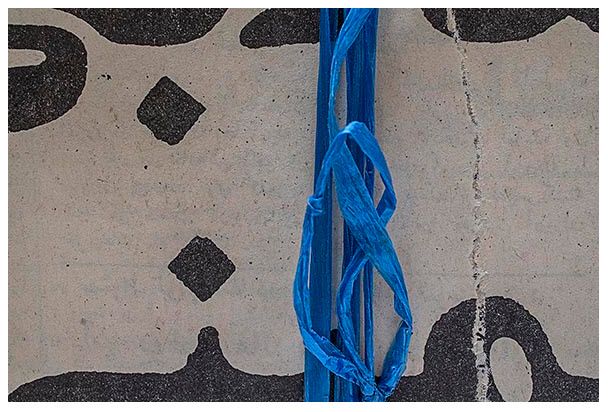
Iranian-Canadian filmmaker Parastoo Anoushahpour, meanwhile, approaches memory and geography from another direction in Peacocks Come with the Clouds. Developed through years of work in Kurdish villages, the film draws on wedding embroideries and collaboration with local children to explore the lives and memories attached to that landscape. Together, these two works extend the Iranian presence at TIFF into territory somewhere between cinema, visual art, archive and memory.
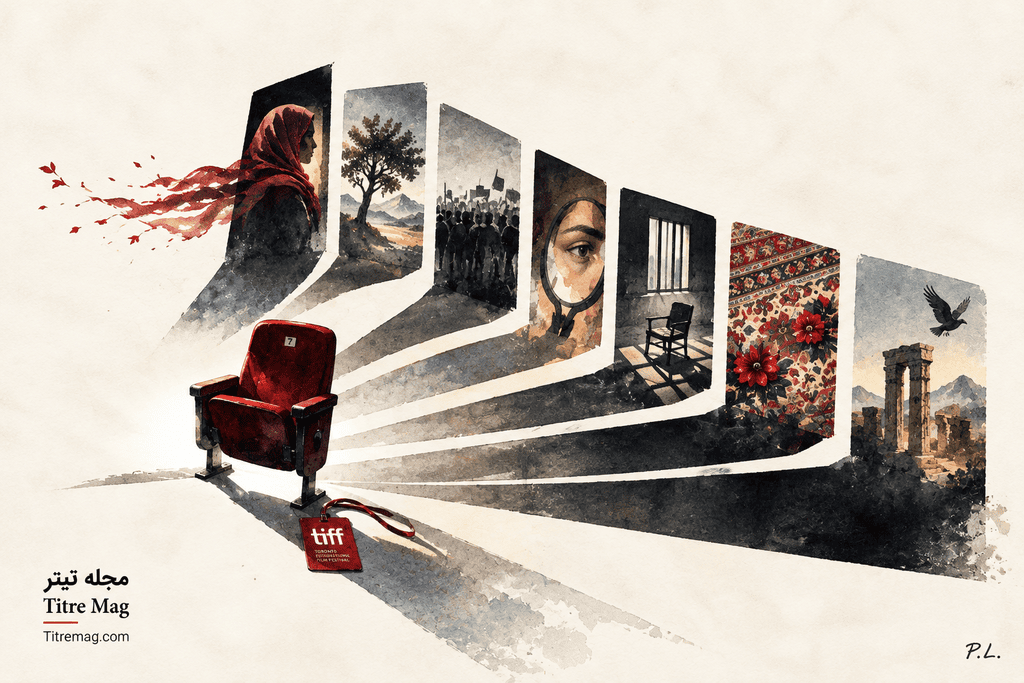
Seven Stories of One Iran
What matters when these seven films are placed beside one another is not simply their number, but how different they are. None can explain “Iran” on its own, and perhaps that is precisely the point. A country shaped by so many contradictions and such varied experiences cannot be reduced to a single film or a single image. Each filmmaker has placed before the camera one fragment of what they have seen, lived through or felt compelled to question.
For me, TIFF this year will once again begin on King Street West: the crowded sidewalks, the lines outside theatres, the conversations after screenings and the constant movement from one cinema to another. But among the hundreds of films at this year’s festival are seven stories that arrive at Iran from seven different directions.
In a few days, the theatre lights will go down, the magic of the silver screen will begin, and Iran will have seven opportunities to show the world seven different stories of itself.