
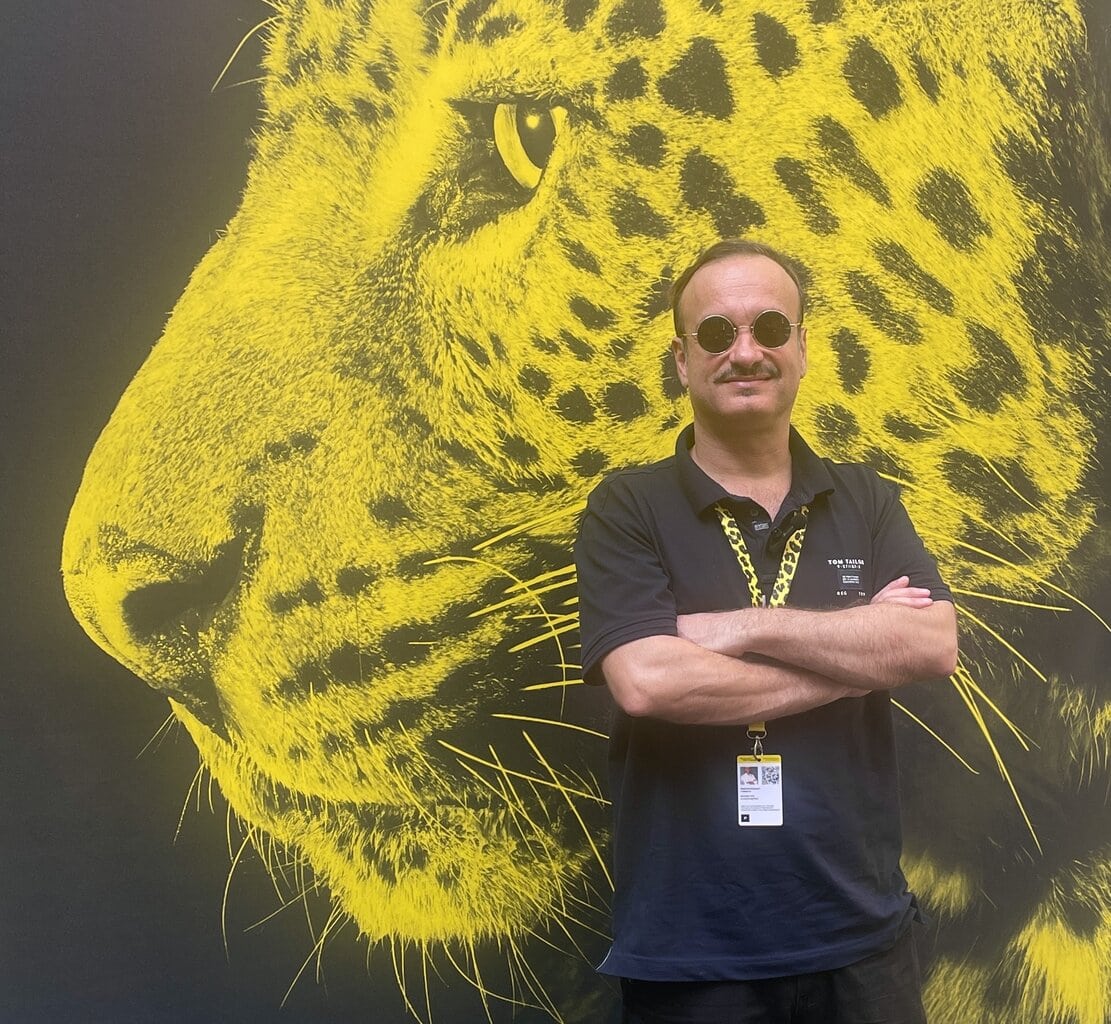
Majid Movasseghi, Locarno | The festival was nearing its final days. The city breathed through cinema halls, ticket lines, post-screening conversations, and the comings and goings of guests; Darren Aronofsky, Isabella Rossellini, James Gray, Asia Argento, and Rick Baker were among the faces who gave the festival an added dimension. Locarno’s Leopards were still waiting for their owners, and for me, at that moment, the question was less about guessing the winner’s name than about finding a film that could leave something behind after the lights in the hall went out.
This edition had no shortage of notable films among its large lineup, but the number of films that truly stood out from that volume was smaller. At times, a gap could be felt between a filmmaker’s reputation, the importance of a subject, and the cinematic language of the film itself. This isn’t unique to Locarno; at major festivals like Cannes, Berlin, and Venice, a filmmaker’s name, distribution power, and economic relationships can shape how visible a film becomes. The trouble begins when that reputation, rather than the film itself, becomes the main measure of judgment—when a filmmaker’s name enters the hall before the film does.
Even so, a common thread ran through this year’s films in various forms: people in search of another—someone who can create distance between themselves and loneliness, the pressure of life, or the world around them. Sometimes this bond forms between two friends, sometimes between two teenagers, within a family, or even between a person and nature. This “other” isn’t always a savior; sometimes they’re simply someone who makes it possible to breathe, if only for a moment.
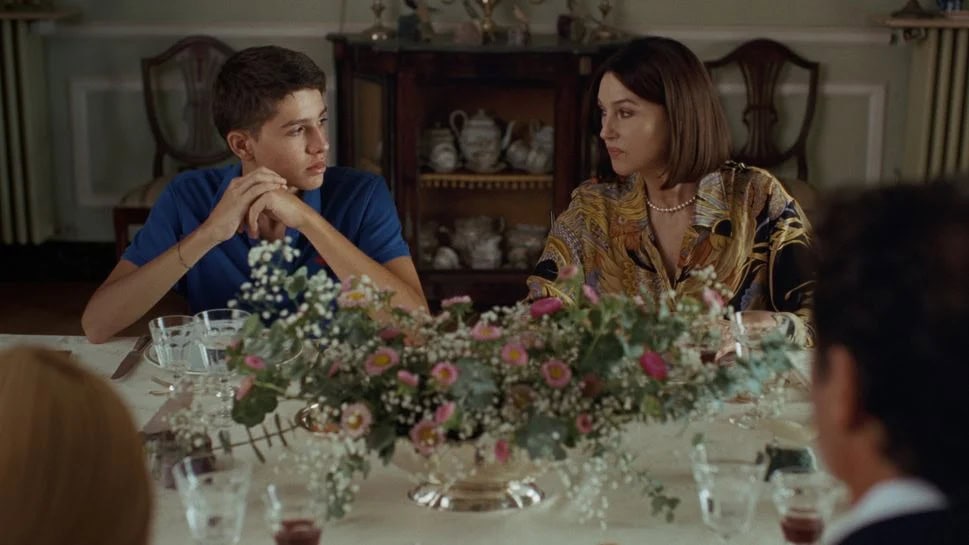
In Ketticè (Chaos), Giulio and Kate, alongside other teenagers, drift among school, family, the street, and drugs. Their friendship becomes a refuge from the adult world, though the film’s execution doesn’t always match the strength of its idea. Even Monica Bellucci’s presence doesn’t necessarily translate into a distinctive performance—perhaps some of what we expect from her presence comes from the weight of her name. Still, the film is lively and full of movement. Bellucci ultimately won one of the festival’s two acting awards.
In Los Días Libres (Free Days), Argentine filmmaker Lucila Mariani uses a young woman’s relationship with a group of skaters, in her debut feature, as a lens onto the condition of a new generation. A natural atmosphere emerges through the performances and the way the story is told, while the cinematography and direction reach a notable maturity. The tension between this generation’s sense of freedom and its inability to find genuine solitude is one of the film’s pleasures—a young woman who wants to build another world for herself and, along the way, finds another person too.
In O Jacaré (The Alligator), place takes on a larger role. The story unfolds in Reboleira, a suburb of Lisbon, where, after money from a robbery goes missing, the neighborhood comes under police pressure and rumor and suspicion spread among residents. The alligator isn’t just a plot device; it becomes a symbol of a power that can swallow people whole. The design of the space, the performances, and the direction build a closed, tense world, and the film is a reminder of how much mise-en-scène matters—how a neighborhood and a social environment can become part of the cinematic experience itself. It seems the directing award more rightfully belonged to this filmmaker than to Hong Sang-soo.
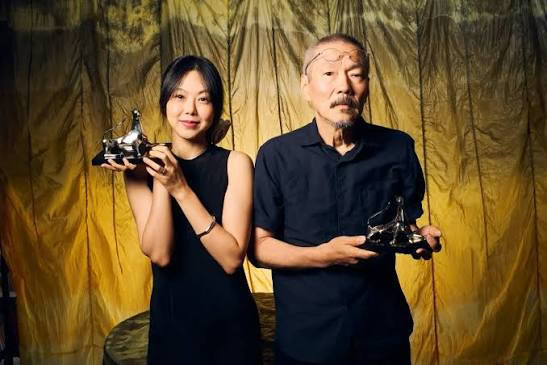
Hong Sang-soo’s presence in the main competition—where every year he makes low-budget films, sometimes even shooting them on an iPhone—raises a different question. His independence in making his work, from writing the screenplay, directing, and shooting to editing and music, is part of his personal signature. But if a young, unknown filmmaker made a film with the same simplicity and the same visual language, would we call those same qualities a “personal voice” to the same degree? The issue isn’t the filmmaker himself, it’s a mechanism by which a name’s reputation sometimes enters the field of judgment before the film does. Do we see the film, or do we first see the name attached to it?
In A Margem do Rio (River’s Edge), the story unfolds in the city of Recife, where the daily grind and hard labor of the character Isaquiel stand in contrast to the nocturnal world he escapes into to flee the exhaustion of his days. At night, he goes into the forest and meets Jeremias, a mysterious fisherman. The river, the water, and the darkness build a space in which a longing for freedom from routine gradually gives shape to a relationship, and to finding another.
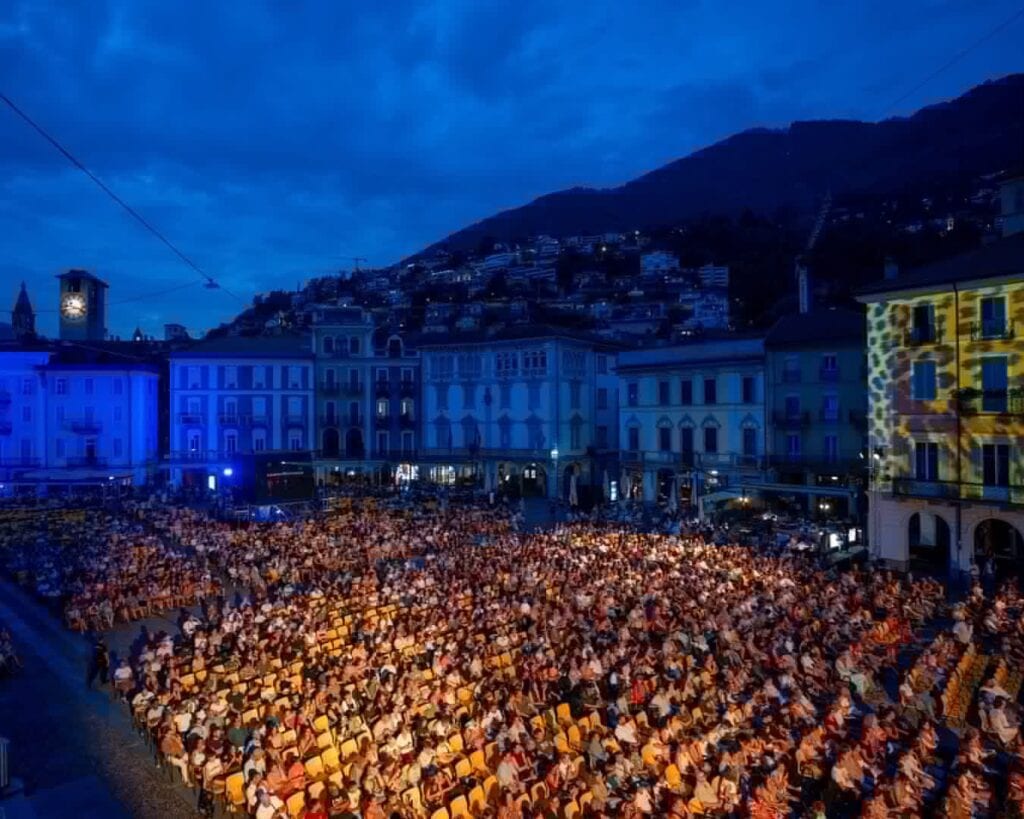
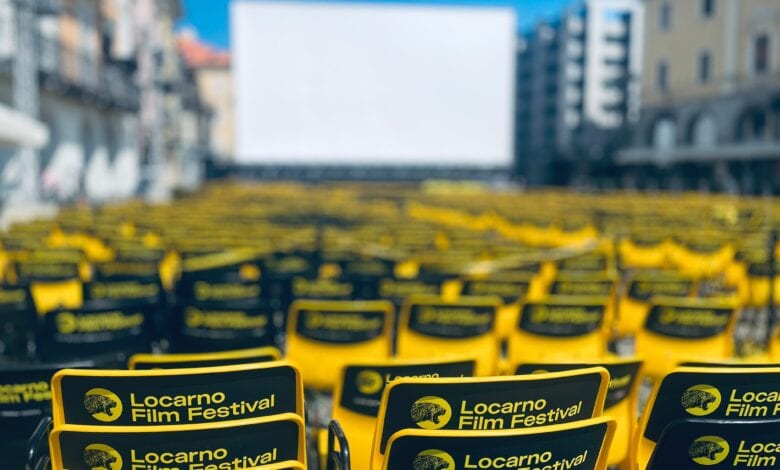
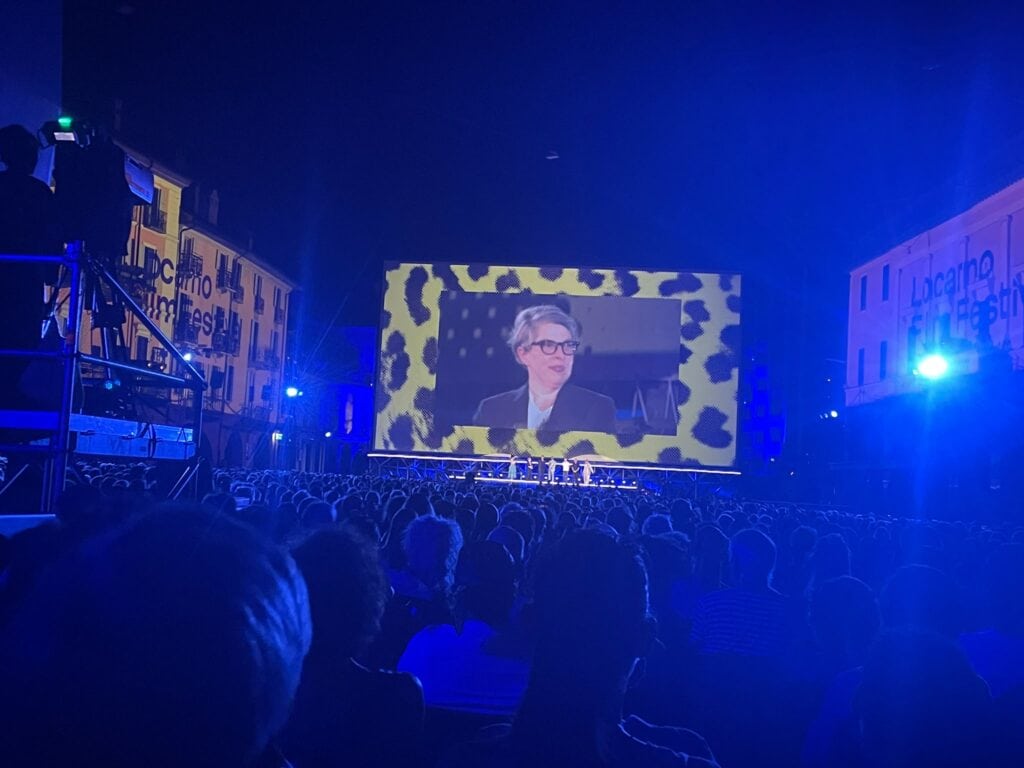
The nights at Piazza Grande have a different atmosphere. As darkness settles over Locarno and the big open-air screen lights up, the film becomes part of a collective experience. I Is Another, Frank & Louis, and The Invite all screened in this setting.
The Invite, contrary to the buzz built up before its premiere, turns out to be a simpler work. Two couples, over the course of one night in one house, fall into an absurd situation that structurally recalls the play and film Who’s Afraid of Virginia Woolf?, directed by Mike Nichols. The Invite isn’t a tedious film, but it doesn’t run especially deep either—it doesn’t pursue any idea seriously, and despite traces of Billy Wilder’s brand of cinema, its comedy never rises much above a passing situation. Despite well-calibrated performances and comic moments, it ends up feeling more like a filmed stage play than a piece of cinema.
Another Piazza Grande title was I Is Another. Much of the film takes place on a train, in dialogue between two characters, but the train’s constant motion pulls this enclosed space out of pure theatricality and gives the mise-en-scène and performances a fluid rhythm. Here, constraint becomes possibility—two people, in the motion of a train, find a way to grow closer.
In Frank & Louis, directed by Petra Volpe, two prisoners are placed in a space essentially built to keep people apart. It’s worth comparing this to the director’s previous film, Heldin (Late Shift): there, the hospital sometimes felt even more like a prison than an actual prison, because the pressure of the work and the gradual breakdown of the lead character—a nurse—turned the space itself into part of the crisis. In Frank & Louis, even though we’re genuinely inside a prison, that space doesn’t become the film’s visual language to the same degree. Perhaps that’s the real difference: between a film that merely takes place in a location and a film that turns a location into cinema. Even so, this Swiss-British film won the Audience Award at Piazza Grande.
This year’s acting categories were also fairly light on truly outstanding performances. A solid turn by Kathrine Johansen, the Norwegian lead of Brave New Love, went unrecognized by the jury, while Larissa Corriveau’s performance in Nobody’s Violence, directed by the distinctive and singular Canadian filmmaker Denis Côté, was among the work that could have received more attention. As in much of his output, Côté’s film resists conventional storytelling and instead leaves its characters in strange, unsettled situations; the body, nature, silence, and unconventional relationships between people make up much of the film’s atmosphere. After the screening, in a brief encounter, I told him: “I think I’ll need to watch your film twice to understand what’s happening.” A knowing smile crossed his face.
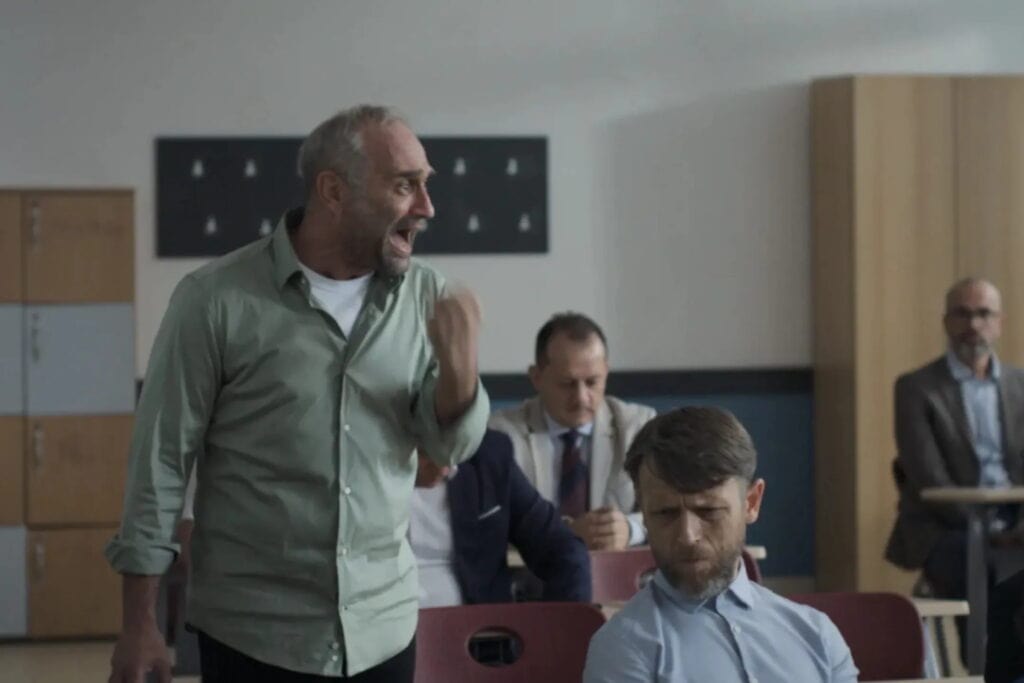
And now to the film that won the Golden Leopard: You Don’t Belong Here, directed by Florin Șerban. I watched it twice—the first time I gave up on it, but once I realized everyone was praising it, I sat through it a second time. My opinion didn’t change. The film follows a doctor who, after his teenage son is accused of murder, is forced to confront a past he believed he’d left behind. The idea, especially in how it links the father’s suppressed past to the present-day tragedy, is worth thinking about.
But there’s a gap between the ambition of the idea and what actually happens on screen. Long takes and dialogue only earn their value when the mise-en-scène, the actors’ movement, the sound, and the visual information within the frame can build a rhythm. At certain moments, the camera simply lingers, and the length of the shot becomes meaning on its own—but a shot’s length doesn’t automatically create greater depth. Even so, the film won over the jury and took home the Golden Leopard, while Teodor Botantschu also received the Jury’s Special Mention for his performance.
In the Cineasti del Presente section, L’estive (Summer Grazing) stood out for its simplicity, following the same thread of “seeking another” in a quieter register. Hannah, a shepherding apprentice, lives in isolation in the Alps, and the arrival of Lisa—who comes to help her and care for the animals—breaks that silence. Nature here isn’t decorative; it’s the environment in which life, work, and people’s need for one another take shape.
But for me, the most lasting film of this edition was La ilusión de un verano sin fin (The Illusion of an Everlasting Summer), by Alessandra Sanguinetti—a film that follows the lives of Guillermina and Belinda over twenty-five years. Old footage sits alongside new footage, and time itself becomes part of the film’s structure. The relationship between these two women needs no explanation; it’s visible in the changing bodies, seasons, and lives, and in the camera’s return, after all those years, to the same two people.
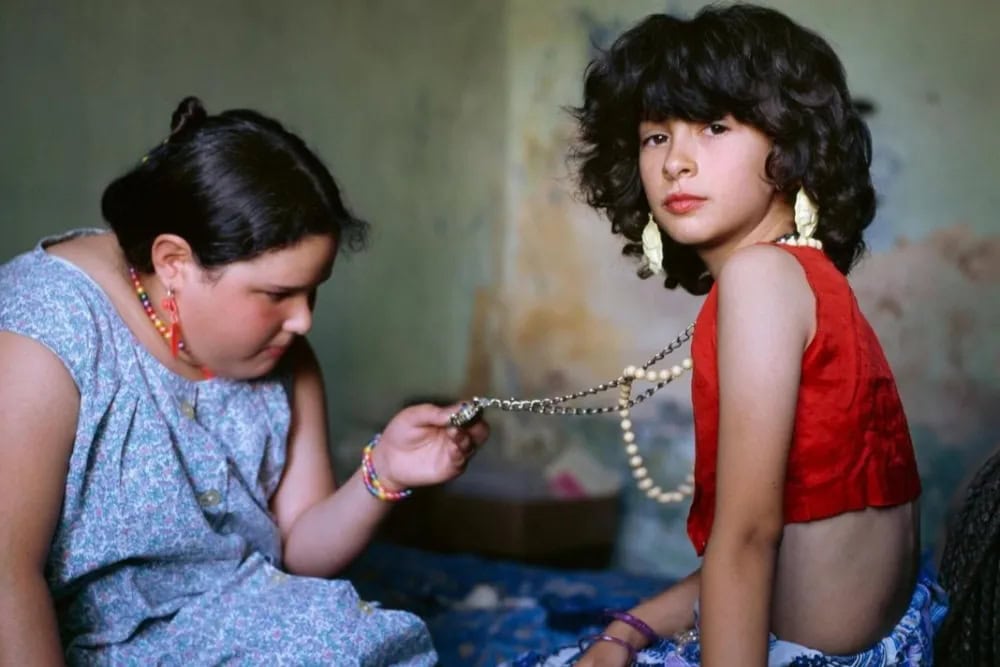
Here, friendship isn’t a passing event but a relationship that time alters, wounds, and reshapes. The camera doesn’t just witness life—it records the passage of time itself. Perhaps that’s why this film goes one step further than many others this year that spoke of relationships, loneliness, or the search for another: it doesn’t need to explain what friendship means. It only needs to show us time.
Perhaps it’s this same thin thread that draws together the otherwise disparate films of this edition—from the two teenagers in Ketticè to the two prisoners in Frank & Louis, from the two travelers in I Is Another to Hannah and Lisa in the silence of the Alps. But in La ilusión de un verano sin fin, this need for another is no longer a single moment or situation; it holds twenty-five years of two people’s lives within it.
The film ultimately won the Golden Leopard of the Cineasti del Presente section, as well as the Swatch First Feature Award. But perhaps its value doesn’t lie only in the number of prizes it won; its value lies in the fact that, long after the film ends, you can still think about those two people and the years that passed between their images.

Perhaps this is what stays with you after a festival ends: not just the names of the winners, but the films that outlast the results list and settle into memory. Amid all the films, names, and noise, only a few truly remain in the mind—sometimes a face, a relationship, a place, or even a single image outlasts any award.
The Leopards eventually found their owners. But perhaps the festival’s real question isn’t which film won a Leopard—it’s which film, once the festival is over, remains the audience’s truest friend.